Security | Threat Detection | Cyberattacks | DevSecOps | Compliance

Understanding and mitigating CVE-2020-8566: Ceph cluster admin credentials leaks in kube-controller-manager log

While auditing the Kubernetes source code, I recently discovered an issue (CVE-2020-8566) in Kubernetes that may cause sensitive data leakage. You would be affected by CVE-2020-8566 if you created a Kubernetes cluster using ceph cluster as storage class, with logging level set to four or above in kube-controller-manager. In that case, your ceph user credentials will be leaked in the cloud-controller-manager‘s log.

Docker vs VMWare: How Do They Stack Up?

This is a clash of virtualization titans: one virtual machine, the other a containerization technology. In reality, both are complementary technologies—as hardware virtualization and containerization each have their distinct qualities and can be used in tandem for combinatorial benefits. Let’s take a look at each to find out how they stack up against each other, as well as how the two can be used in tandem for achieving maximum agility.

Session Control for SSH and Kubernetes in Teleport 4.4

Teleport 4.4 is here! The major innovation we’re introducing in this version is much improved control over interactive sessions for SSH and Kubernetes protocols. We’ll do a deeper dive into session control later, but for those who aren’t familiar with it, Teleport is an open source project. It provides access to SSH servers and Kubernetes clusters on any infrastructure, on any cloud, or any IoT device, anywhere, even behind NAT.

PSPs vs. OPA Gatekeeper: Breaking down your Kubernetes Pod security options

Organizations are increasingly turning to Kubernetes, but they’re having trouble balancing security in the process. In its State of Container and Kubernetes Security Fall 2020 survey, for instance, StackRox found that 91% of respondents were using Kubernetes to orchestrate their containers and that three quarters of organizations were using the open-source container-orchestration system in production.

Understanding and mitigating CVE-2020-8563: vSphere credentials leak in the cloud-controller-manager log

While auditing the Kubernetes source code, I recently discovered an issue (CVE-2020-8563) in Kubernetes that may cause sensitive data leakage. You would be affected by CVE-2020-8563 if you created a Kubernetes cluster over vSphere, and enabled vSphere as a cloud provider with logging level set to 4 or above. In that case, your vSphere user credentials will be leaked in the cloud-controller-manager‘s log.
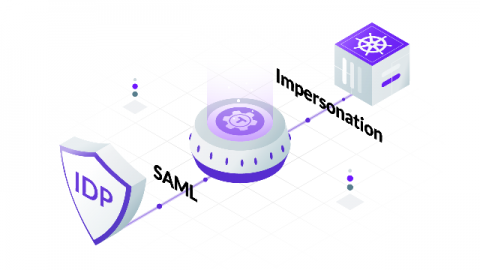
How to Set Up Kubernetes SSO with SAML

Kubernetes has some impressive baked-in role based access controls (RBAC). These controls allow administrators to define nuanced permissions when querying Kubernetes resources, like Pods, Deployments, ReplicaSets, etc. For those familiar with Kubernetes, the value of RBAC is immediately recognizable. A single Kubernetes cluster can contain your organization’s entire CI/CD pipeline, highly available SaaS products, or infrastructure that is in the process of being moved to the cloud.

K3s + Sysdig: Deploying and securing your cluster... in less than 8 minutes!

As Kubernetes is eating the world, discover an alternative certified Kubernetes offering called K3s, made by the wizards at Rancher. K3s is gaining a lot of interest in the community for its easy deployment, low footprint binary, and its ability to be used for specific use cases that the full Kubernetes may be too advanced for. K3s is a fully CNCF (Cloud Native Computing Foundation) certified Kubernetes offering.

Extending Your Fortinet FortiManager to Kubernetes

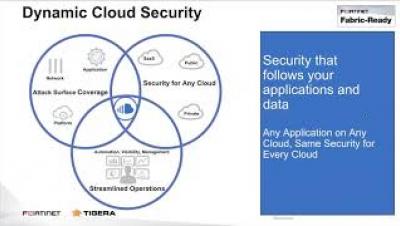
Tigera and Fortinet have joined forces to solve this operational challenge. With the combination of FortiManager and Calico Enterprise, you gain access control and full visibility into the container environment along with centralized management. In this webinar, you will learn how Calico Enterprise and FortiManager enable you to.
Featured Post

Container Inspection: Walking The Security Tightrope For Cloud DevOps

Containers are at the forefront of software development creating a revolution in cloud computing. Developers are opting for containerization at an impressive rate due to its efficiency, flexibility and portability. However, as the usage of containers increases, so should the security surrounding it. With containers comprising of many valuable components it is of the utmost importance that there are no vulnerabilities exposed when developing applications, and risks are mitigated before containers, and their contents, reach the end-user.