In this blog, we will compare and contrast Falco vs. AuditD from a Host Intrusion Detection (HIDS) perspective. AuditD is a native feature to the Linux kernel that collects certain types of system activity to facilitate incident investigation. Falco is the CNCF open-source project for runtime threat detection for containers and Kubernetes. We will dig deeper into the technical details and cover the installation, detection, resource consumption, and integration between both products.
Organizations are increasingly adopting Kubernetes to manage their containerized workloads and services, but Kubernetes security incidents are on the rise, as well. In the fall 2020 edition of the “State of Container and Kubernetes Security” report, for instance, 91% of respondents told StackRox that they had recently adopted Kubernetes. Three quarters of survey participants went on to reveal that they had deployed the container orchestration platform in their production environments.
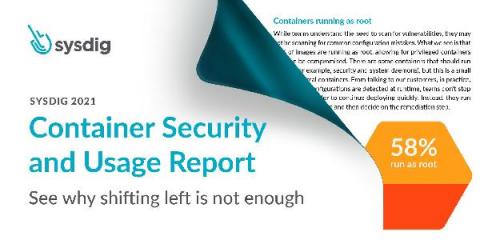
The fourth annual Sysdig container security and usage report looks at how global Sysdig customers of all sizes and industries are using and securing container environments. By examining how and when organizations are implementing security in the development lifecycle, we have been able to uncover some interesting data points in this year’s report. For example, we can see that 74% of organizations are scanning container images in the build process.
Today, Red Hat announced its intent to acquire Stackrox. This is a very exciting development in the world of cloud-native security! First and foremost, congratulations to Stackrox, an early participant in the container security space. This acquisition is a great outcome for Stackrox given their nascent scale and on-premises offering.
Most modern organizations understand that the earlier you integrate security into the development process, the more secure the applications will be in production. For containerized workloads, securing the container image throughout the application life cycle is a critical part of security, but many organizations don’t even follow basic best practices for ensuring secure container images.
Kubernetes continues to be a popular platform for deploying containerized applications, but securing Kubernetes environments as you scale up is challenging. Each new container increases your application’s attack surface, or the number of potential entry points for unauthorized access. Without complete visibility into every managed container and application request, you can easily overlook gaps in your application’s security as well as malicious activity.