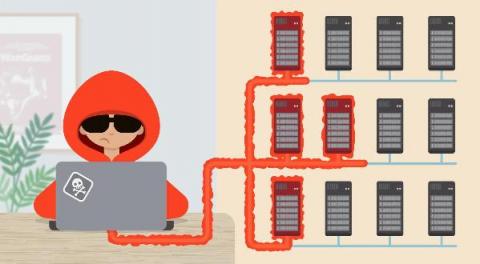
Enterprises have traditionally relied on perimeter network security to keep attackers out and protect their organizationally unique sensitive data and resources. This approach works on the principle “verify, always trust” wherein authenticated users inside the network are trusted by default and allowed unfettered access. With the shift to cloud-native architecture, perimeter-based defenses have become obsolete and leave systems inherently vulnerable to malicious actors.
Last June, Tigera announced a first for Kubernetes: supporting open-source WireGuard for encrypting data in transit within your cluster. We never like to sit still, so we have been working hard on some exciting new features for this technology, the first of which is support for WireGuard on AKS using the Azure CNI. First a short recap about what WireGuard is, and how we use it in Calico.
We just open sourced our Kubernetes controller for the Styra Declarative Authorization Service (DAS). If you are interested in managing OPAs via Styra DAS via Kubernetes, read on.
In 2014, Kubernetes surfaced from work at Google and quickly became the de facto standard for container management and orchestration. Despite its silicon valley origins, it became one of the most impactful open-source projects in the history of computing. Today, the Cloud Native Computing Foundation (CNCF) maintains Kubernetes with many private companies and independent open-source developers.
In the early days of Styra when we were creating Open Policy Agent (OPA), we had a singular goal in mind: help engineers enforce any policy over any piece of software. We wanted people to be able to write any policy they’d like, whether it be about complex resources managed by Kubernetes or public cloud, APIs routed through gateways or service meshes, data stored in relational or document databases, application deployments controlled by CICD pipelines, and so on.
Cloud-native transformations come with many security and troubleshooting challenges. Real-time intrusion detection and the prevention of continuously evolving threats is challenging for cloud-native applications in Kubernetes. Due to the ephemeral nature of pods, it is difficult to determine source or destination endpoints and limit their blast radius. Traditional perimeter-based firewalls are not ideal fit for Kubernetes and containers.
As we embark on another holiday season in the United States, we are being told to start our holiday shopping even earlier this year to avoid some of the delays in shipping. These slowdowns stem from a number of factors, including container shortages, Covid-19 outbreaks that backlogged ports, and a dearth of truck drivers and warehouse workers. Even without the shortages and slowdowns, retailers are in for a long holiday season ahead of them as sales are predicted to grow by 7% this holiday season.