Security | Threat Detection | Cyberattacks | DevSecOps | Compliance

Securing containers on Amazon ECS Anywhere

Amazon Elastic Container Service (ECS) Anywhere enables you to simply run containers in whatever location makes the most sense for your business – including on-premises. Security is a key concern for organizations shifting to the cloud. Sysdig has validated our Secure DevOps platform with ECS Anywhere, giving AWS customers the security and visibility needed to run containers confidently on the new deployment model.

5 Strategies for Safeguarding your Kubernetes Security

Since Google first introduced Kubernetes, it’s become one of the most popular DevOps platforms on the market. Unfortunately, increasingly widespread usage has made Kubernetes a growing target for hackers. To illustrate the scale of the problem, a Stackrox report found that over 90% of respondents had experienced some form of security breach in 2020. These breaches were due primarily to poorly-implemented Kubernetes security.

Detecting and Mitigating CVE-2021-25737: EndpointSlice validation enables host network hijack

The CVE-2021-25737 low-level vulnerability has been found in Kubernetes kube-apiserver where an authorized user could redirect pod traffic to private networks on a Node. The kube-apiserver affected are: By exploiting the vulnerability, adversaries could be able to redirect pod traffic even though Kubernetes already prevents creation of Endpoint IPs in the localhost or link-local range.

Securing the new AWS App Runner service

In its mission to simplify building and running cloud-native applications for users, Amazon has announced the GA of AWS App Runner, a new purpose-built container application service. With security top of mind for most organizations shifting to the cloud, Sysdig has collaborated with AWS to enable threat detection for the new platform.

Digging into AWS Fargate runtime security approaches: Beyond ptrace and LD_PRELOAD

Fargate offers a great value proposition to AWS users: forget about virtual machines and just provision containers. Amazon will take care of the underlying hosts, so you will be able to focus on writing software instead of maintaining and upgrading a fleet of Linux instances. Fargate brings many benefits to the table, including small maintenance overhead, lower attack surface, and granular pricing. However, as any cloud asset, leaving your AWS Fargate tasks unattended can lead to nasty surprises.

Hack my misconfigured Kubernetes at Kubecon Europe

In the last few years, we’ve seen more and more responsibilities shift left – to development teams. With the widespread adoption of Kubernetes, we’re now seeing configurations become a developer issue first and foremost. This responsibility means that developers need to be aware of the security risks involved in their configurations.

The State of Infrastructure as Code Security at Kubecon Europe

The adoption of infrastructure-as-code and configuration-as-code is soaring with the rising popularity of technologies like Kubernetes and Terraform. This means that designing and deploying infrastructure is a developer task, even if your “developer” is an infrastructure architect, and, just like application code, configurations can use test-driven methodologies to automate security prior to deployment.

Securing AWS Fargate workloads: Meeting File Integrity Monitoring (FIM) requirements

Securing AWS Fargate serverless workloads can be tricky as AWS does not provide much detail about the internal workings. After all… it’s not your business, AWS manages the scaling of underlying resources for you. :) While the security and stability of Fargate’s system is an inherent feature, Fargate follows a shared responsibility model, where you still have to take care of securing those parts specific to your application..

AWS Fargate runtime security - Implementing File Integrity Monitoring with Sysdig

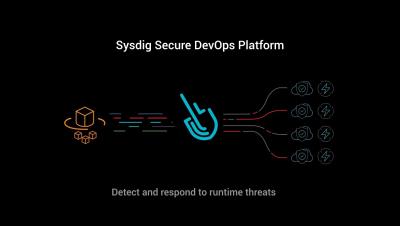
Thanks to serverless you can focus on your apps, instead of your infrastructure. Take AWS Fargate as an example. A service where you can deploy containers as Tasks, without worrying what physical machine they run on. However, without access to the host How can you detect suspicious activity? Like, file changes on your Fargate tasks? Sysdig provides runtime detection and response to secure Fargate serverless containers.