Sysdig Introduces Low-Touch Zero Trust Network Security for Kubernetes
Deep network visibility cuts time required to implement Kubernetes microsegmentation.


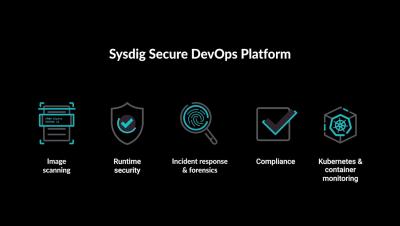
If you’re running containers and Kubernetes on IBM Cloud, you can now enable the key security workflows of Sysdig Secure as a service within your IBM Cloud deployments. This makes it easier for you to implement security tools and policies to ensure your containers and your Kubernetes environment are protected and running as intended. The new container and Kubernetes security features are integrated into IBM Cloud Monitoring with Sysdig and offered as an additional service plan.
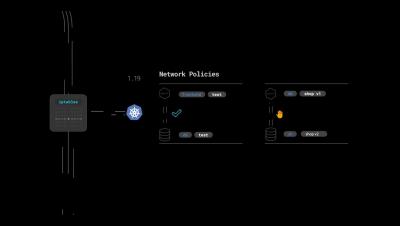
Microservices and Kubernetes have completely changed the way we reason about network security. Luckily, Kubernetes network security policies (KNP) are a native mechanism to address this issue at the correct level of abstraction. Implementing a network policy is challenging, as developers and ops need to work together to define proper rules. However, the best approach is to adopt a zero trust framework for network security using Kubernetes native controls.
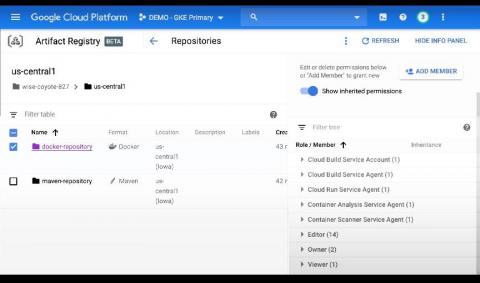
In support of modern application development built on CI/CD, containers and open source, Google Cloud launched Artifact Registry (now generally available), a new artifact management solution. Sysdig helps DevOps teams using Artifact Registry confidently secure the build pipeline with comprehensive image scanning that identifies container vulnerabilities and misconfigurations to reduce risk.
This article contains useful tips to implement SOC 2 compliance for containers and Kubernetes. The Service Organization Controls (SOC) reports are the primary way that service organizations provide evidence of how effective their controls are for finance (SOC 1) or securing customer data (SOC 2, SOC 3). These reports are issued by the American Institute of Certified Public Accountants (AICPA).
The worlds of information technology (IT) and operational technology (OT) are colliding. In July 2019, Automation.com cited a survey finding where 82% of respondents told Forrester and Nozomi Networks that their organizations were in the early stages of an IT-OT convergence. Some said their organizations were embracing this meeting more fully. This finding begs several questions. Why are IT and OT converging?