Security | Threat Detection | Cyberattacks | DevSecOps | Compliance

81% of Small Businesses Sustained a Cyber Incident Over the Past Year

Eighty-one percent of small businesses suffered a security or data breach over the past year, and 38% of these businesses were forced to raise their prices as a result, a report from the Identity Theft Resource Center (ITRC) has found. The report notes that external hackers have overtaken malicious insiders as the most common root cause of these incidents. This trend is partially driven by AI-assisted social engineering attacks, which were cited as a root cause by more than 41% of victims.

FedRAMP Audit Log Retention Rules and Storage Options

Every cloud service provider that seeks an authorization to operate with the federal government using the FedRAMP framework has to undergo and pass an audit. Beyond passing the audit, the CSP needs to keep and maintain proof of not just their external audit, but also internal audits, continuous monitoring results, and more.

Streamlining Field Workflows with Egnyte + GoFormz

Modern businesses need faster, more accurate ways to capture data and move it securely across teams. Paper forms, manual uploads, and scattered files slow work down and introduce unnecessary risk. With GoFormz and Egnyte, organizations can digitize field data capture while ensuring information is securely stored, governed, and ready for collaboration.

CVE-2025-20393: Threat Campaign Targeting Cisco Secure Email Gateway, Cisco Secure Email and Web Manager

On December 17, 2025, Cisco published an advisory detailing a new threat campaign identified on December 10, affecting the Cisco AsyncOS software used on Cisco Secure Email Gateway and Cisco Secure Email and Web Manager. The campaign is exploiting an unpatched zero-day vulnerability, which only affects deployments with the Spam Quarantine feature enabled. It allows threat actors to execute arbitrary commands with root privileges on affected devices. This feature is not enabled by default.

Detecting CVE-2025-20393 exploitation: catching UAT-9686 on Cisco appliances

CVE-2025-20393 is a CVSS 10.0 Remote Code Execution (RCE) flaw in Cisco Secure Email Gateways currently being actively exploited by China-nexus groups. A recent advisory from Cisco Talos details how an actor dubbed “UAT-9686” is leveraging this vulnerability to target Cisco Secure Email Gateways (ESA) and Secure Email and Web Managers (SMA). The attack allows threat actors to execute arbitrary commands with root privileges and deploy persistence mechanisms.

Get Ready for CMMC Enforcement: Essential Steps to Secure CUI

The U.S. Department of Defense (DoD) introduced its Cybersecurity Maturity Model Certification (CMMC) program in early 2020 to strengthen cybersecurity across the Defense Industrial Base (DIB) and ensure that contractors handling Controlled Unclassified Information (CUI) meet strict cybersecurity standards defined by the National Institute of Standards and Technology (NIST).

Inside CrowdStrike's Science-Backed Approach to Building Expert SOC Agents

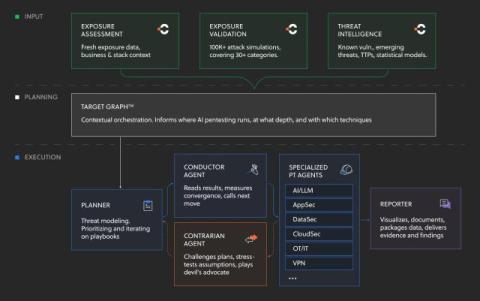
Security teams are at a critical inflection point. AI-enabled adversaries now operate at machine speed, automating phases of the kill chain and scaling attacks faster than human-only workflows can respond. Yet most SOCs still depend on manual triage and investigation processes that cannot keep pace.

Regulatory Compliance & Data Tokenization Standards

Organizations across finance, healthcare, retail, and especially AI-driven sectors are facing increasing pressure from global regulators. The rapid expansion of AI, the growth of cross-border data flows, and the rise of new privacy frameworks all contribute to a landscape that demands more structure and accountability. In this environment, regulatory compliance and data tokenization are becoming inseparable.

When Misconfigurations Become the Front Door: What Russia's Edge Device Campaign Signals for Modern Cyber Defense

A recent Dark Reading article highlighted a sobering shift in how nation-state threat actors are gaining access to critical infrastructure. According to reporting on a new Amazon Threat Intelligence disclosure, Russian actors affiliated with the GRU have spent years refining a campaign that increasingly bypasses traditional vulnerability exploitation altogether. Instead, they are walking straight through the front door left open by misconfigured network edge devices.

When Customer Data Quietly Walks Out the Door: Lessons from the Coupang Breach

Large data breaches rarely begin with dramatic system failures. More often, they start with sustained, unauthorized access to sensitive data that goes undetected for months. The recent breach at Coupang, South Korea’s largest e-commerce platform, illustrates this pattern clearly. Nearly 34 million customer records were likely exposed over an extended period before detection.