Value Over Growth: How Tech Leaders Can Streamline IT Operations
More prudent use of endpoint management tools could hold the key.


More prudent use of endpoint management tools could hold the key.
Everybody’s doing it: shifting applications to the cloud. More flexibility. More storage. More scalability. But how does this affect application security? What challenges does it present?
AT&T Alien Labs researchers have discovered a new variant of BlackGuard stealer in the wild, infecting using spear phishing attacks. The malware evolved since its previous variant and now arrives with new capabilities.
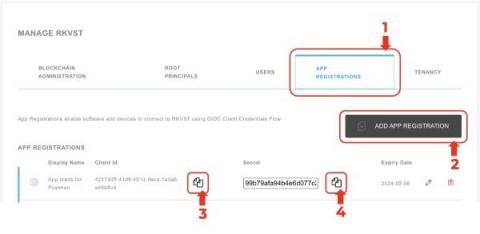
We’re very pleased with our Python SDK, Jupyter Notebooks, and our OpenAPI Developer Console but sometimes we all want a bit more fine control or command chaining than those can offer. One of my favourite tools for such situations is, of course, Postman. It can make interacting with RKVST super quick and easy, and help you develop custom workflows for storing and validating your digital evidence ledgers.
Undeniably, many companies fail to subscribe to an effective process for developing software that does not introduce added risk to the enterprise. Proprietary applications are coded without regard for security implications and are rushed to production in the name of increased quarterly revenue opportunities. Poorly engineered code can result in software security issues such as buffer overflows, improperly handled exceptions, memory leaks and input validation issues.
In late 2022, artificial intelligence (AI) chat and conversational bots garnered large followings and user bases. AI chatbots, including ChatGPT, Meta’s Blender Bot3 and DeepMind, and Google’s Sparrow, have numerous benefits and uses, including potentially replacing current search engines, but there are notable drawbacks.
1Password CLI brings seamless biometric authentication to your favorite terminal-based editor, Neovim.
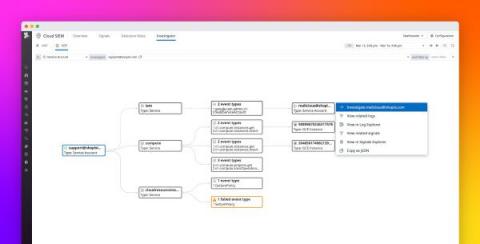
Cloud environments, in all their dynamic complexity, demand careful monitoring by DevOps and security teams. But the sheer abundance of telemetry data associated with the thousands of resources, users, and roles that comprise these environments can make monitoring a formidable task, causing security risks and other issues to be all too easily overlooked.