Security | Threat Detection | Cyberattacks | DevSecOps | Compliance

How to Find Security Gaps Using the Aurora Attack Surface Management Venn Diagram

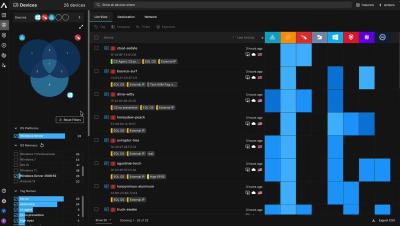
How do you find devices that your security tools don't cover? The Integration Venn Diagram in Arctic Wolf Aurora Attack Surface Management (ASM) compares data from Active Directory, CrowdStrike, Automox, SentinelOne, and Qualys in one view, so you can see coverage gaps, unmanaged devices, and blind spots that no single tool reveals. In this demo, we start with 3,631 devices and layer in data sources one at a time to find.
Cloudflare Responds to Critical PHP RCE Vulnerabilities: Why WAF Enforcement Matters

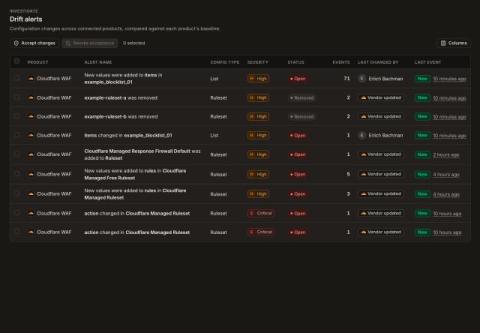
Two critical PHP vulnerabilities have been disclosed, potentially exposing millions of web servers to remote code execution. Cloudflare has already responded by deploying emergency WAF protections. For Reach customers using Cloudflare WAF, Reach Drift automatically detected the new rules and confirmed they were enabled and configured to block malicious traffic.

CVE-2026-94244: Missing Authorization in Wallet System for WooCommerce

Vulnerability: Missing Authorization Leading to Store-Wide Customer Data Exposure via Exported Wallet Transaction File Vulnerable Version: < 2.8.0 Patched Version: 2.8.0 CVE: CVE-2026-94244 CVSS: 4.3 (Medium) AV:N/AC:L/PR:L/UI:N/S:U/C:L/I:N/A:N CWE: CWE-862 (Missing Authorization) → CWE-200 (Sensitive Information Disclosure) On 02/09/2026, a security researcher at Astra Security found a Missing Authorization vulnerability in Wallet System for WooCommerce, a popular WordPress plugin by WP Swings that

Appknox MCP: Find, Fix and Verify Mobile App Vulnerabilities Without Leaving Your IDE

Appknox MCP agent connects your AI coding agent to your Appknox scan results and KnoxIQ analysis. Your agent triages findings by exploitability, fixes the code in your repo and verifies each fix with a re-scan, inside Claude Code, Cursor, GitHub Copilot, Codex or Windsurf. Your AI coding agent already writes features, refactors code and fixes bugs. It can't see your security findings. So when a scan flags a vulnerability in your mobile app, the fix still starts by hand.

Warning: Phishing Attacks Are Abusing RMM Tools to Target Bank Accounts

Researchers at Fortra are tracking a surge in phishing attacks targeting bank accounts via remote monitoring and management (RMM) tools. “Hybrid phishing-to-RMM campaigns have emerged as a potent method to target North American financial institutions, with a focused interest in business commercial banking accounts,” Fortra says.

AI Data Centers: Environmental Disaster or Groundbreaking Innovation?

Insights from Attempted Intelligence, Episode 2, hosted by Matt Duren, SVP of AI and data, KnowBe4 and Harlan Parrott, VP of AI innovation, KnowBe4. AI data centers are one of the most debated topics in the world right now. Some people worry about the energy and water it takes to run them. Others see the foundation for the next wave of AI advances. Both camps have a point. On episode two of the Attempted Intelligence podcast, Matt and Harlan each picked a side and debated it.

PHP2Shell: the fix is a runtime upgrade, not a code change

On October 21, 2026, PHP released 8.5.12, 8.4.27, 8.3.36, and 8.2.35 to close two critical remote code execution flaws in the PHP runtime. Both are rated CVSS v4.0 9.2. Together they go by the name “PHP2Shell.” The flaws sit in PHP itself, not in any application built on it. A secure codebase running on an affected PHP build is still exposed. That makes this an inventory problem first and a patching problem second.

Compromised LiteLLM 1.107.0 on PyPI Ships a Credential Stealer and Code Loader

On October 21, 2026, a malicious release of litellm, the Python library and proxy for calling LLM provider APIs, was published to PyPI as version 1.107.0. All seven compiled wheels carried three extra files that install straight into the root of site-packages: a.pth hook that runs a credential stealer every time Python starts, and a sitecustomize.py that starts a background loader built to fetch and run remote Python code every hour. The package has had more than 92 million downloads over the past month.

Shadow AI Is Only the Symptom: The Real Problem Is SaaS Visibility

The rise of AI tools in the workplace has put Shadow AI firmly on the cybersecurity agenda. Employees are increasingly adopting AI services without IT or security approval, potentially creating security, privacy, and compliance risks. But focusing on Shadow AI alone misses the bigger issue. The real question is not just which AI tools employees use, but whether organizations understand what is happening across their entire SaaS environment.