The Future of Firmware in Edge Computing and Embedded AI

Here's what's happening right now: intelligence is migrating closer to the action. Your smart devices? They're not sitting around waiting for some distant cloud server to tell them what to do anymore. They're making decisions on the spot, right where the work happens. This transformation is fundamentally altering how intelligent systems get built and deployed. Consider this: the global AI in embedded systems market is heading toward US$26.2 billion by 2026.

Seraphic Becomes the First and Only Secure Enterprise Browser Solution to Protect Electron-Based Applications

Seraphic, the leader in enterprise browser security (SEB) and AI enablement, today announced native protection for Electron-based applications such as ChatGPT desktop, Teams, Slack, and more, becoming the first and only browser security platform to introduce this capability.

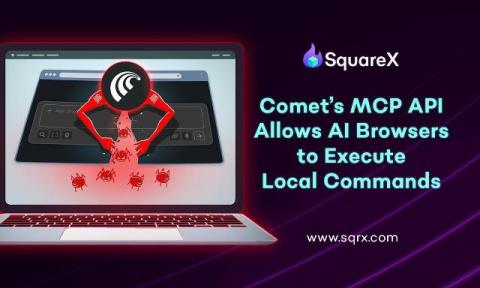
Obscure MCP API in Comet Browser Breaches User Trust, Enabling Full Device Control via AI Browsers

SquareX released critical research exposing a hidden API in Comet that allows extensions in the AI Browser to execute local commands and gain full control over users' devices. The research reveals that Comet has implemented a MCP API (chrome.perplexity.mcp.addStdioServer) that allows its embedded extensions to execute arbitrary local commands on users' devices, capabilities that traditional browsers explicitly prohibit. Concerningly, there is limited official documentation on the MCP API.

Device provisioning struggles due to M&As, high staff turnovers, and Epic go-lives

Two primary trends are reshaping the healthcare industry: First, healthcare experiences a high number of mergers and acquisitions (M&As), with affiliates frequently joining and exiting as contracts evolve. Second, staff turnover remains persistently high, largely driven by burnout among healthcare practitioners.

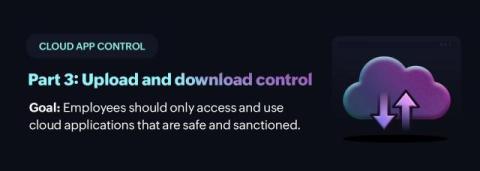
Mastering cloud app control, Part 3: Governing file transfers

In Part 1 and Part 2 of the cloud app control blog series, we saw how SinaraTech, a mid-sized ecommerce company, used access control to block risky apps and login control to weed out unauthorized access to legit applications. But the danger wasn't over yet. The Security SOC team had one final piece that was missing from the cloud app control puzzle. Let's continue down the road to find that piece.

How to Prevent Website Data Leaks: GDPR, HIPAA, PCI DSS Compliance

Website data leaks don’t require hackers. They happen when legitimate scripts, analytics pixels, and chat widgets transmit sensitive data to third parties through routine operations. Traditional security tools miss these leaks because they monitor server-side traffic while the exposure occurs in customer browsers. This visibility gap is why organizations use client-side monitoring platforms to detect browser-level data flows that security tools can’t see.

Come see us at Microsoft Ignite: Live Demos & How We Optimize Your Security Stack

We're live. Cheyenne, Walter, and Cain are giving demos, answering questions, and showing how Reach helps teams optimize their security stack. Level up your knowledge and get some loot on this side quest. Come see us: Microsoft Ignite — San Francisco Booth 4037 November 18–21, 2025.