Outpost24 Acquires Infinipoint to Power Its Entry into the Zero Trust Workforce Access Market

The strategic acquisition strengthens market leadership by unifying user identity with device trust, eliminating security blind spots. STOCKHOLM / PHILADELPHIA (December 9, 2025) – Outpost24, a leader in exposure management and identity security, today announced the acquisition of Infinipoint, a specialist in device identity, posture validation, and secure workforce access.

Ep 10 - Beyond CVEs: Why Patching Isn't Enough to Stop Breaches

Most security teams obsess over patching CVEs—but even perfect patch compliance won’t keep you safe. In this episode, SafeBreach Co-Founder & CTO Itzik Kotler and VP of Sales Engineering Michael De Groat reveal the real exposures that hide between patches, from misconfigurations and identity gaps to insider threats, social engineering, and zero-days. Hear why attackers exploit more than just known vulnerabilities, and how adopting an assumed-breach mindset with adversarial simulation strengthens real-world resilience.

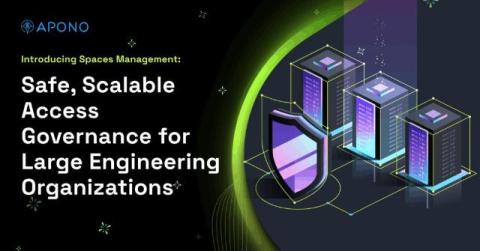
Introducing Spaces Management: Safe, Scalable Access Governance for Large Engineering Organizations

Large engineering organizations all run into the same challenge: as teams grow, clouds multiply, and environments diversify, access governance becomes noisy, risky, and difficult to delegate safely. Apono’s new Spaces Management feature gives enterprises a clean, scalable way to segment access governance across departments without spinning up multiple tenants or losing centralized control.

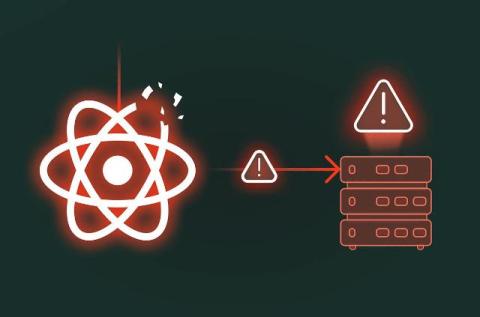
Cato CTRL Threat Brief: "React2Shell" Vulnerability Targeting React Server Components

On Wednesday, December 3, a critical remote code execution (RCE) vulnerability in React Server Components (RSC), dubbed React2Shell (CVE-2025-55182), was disclosed. The CVE was discovered by security researcher Lachlan Davidson. It quickly gained traction with multiple third-party proof of concepts (PoCs) being published of varying quality and credibility.

How AI agent privileges are redefining cyber insurance expectations

When ransomware drove record losses, insurers began scrutinizing basic controls like multi-factor authentication (MFA), backups, and endpoint detection. Now, AI-driven automation is introducing a new category of risk—AI agents—and insurers are responding with heightened attention to privilege management. AI agents are non-human identities that can approve payments, access sensitive data, and execute commands using powerful API keys.

Transforming AI Risk Awareness Into Measurable AI Governance

Only a few years ago, after more than a decade of debate over how cybersecurity incidents affect the financial stability of public companies, the U.S. Securities and Exchange Commission (SEC) finally made cyber risk disclosure a formal requirement. The intent was to bring transparency and accountability to a category of risk that had long been treated as technical rather than financial. Now, albeit voluntarily, AI has entered that same conversation, but the speed of its arrival has been remarkable.

Close the "Unfixable" Vulnerability Gap

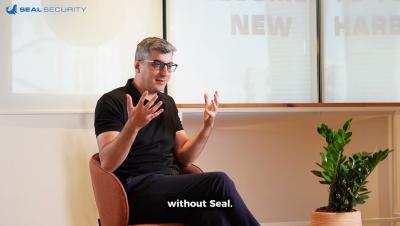
30% of open source vulnerabilities are marked “unfixable”. Not because they can’t be fixed but because traditional tools stop there. Your customers don’t care. They just see unresolved CVEs. And they won’t sign off on software that fails a scan. That’s where the real business risk lies. In mid-size software companies, “unfixable” means delayed deals, failed audits, and lost revenue. Seal Security was built to close that 30% gap.

Warning: Phishing Campaign Leveraging Evilginx Targets U.S. Universities

Threat actors are using the open-source phishing framework Evilginx to target universities across the United States, according to researchers at Infoblox. The attackers have targeted at least 18 universities and educational entities since April 2025, using phishing pages that spoofed student single sign-on (SSO) portals. “In the campaigns we analyzed, students were targeted via personalized emails that contained TinyURL links,” Infoblox says.

What are you doing to stay safe from supply chain attacks?

Automatic updates were supposed to make us safer. Instead, they’ve become one of the easiest entry points for supply-chain attacks. When a public repository is compromised, an attacker uploads a malicious version and waits, for 30 minutes to a few hours, before the community detects and removes it. During that window, automated tools like Dependabot can pull that version straight into production. That small window of time is enough to compromise thousands of systems.

The role of credentials in the AI espionage campaign reported by Anthropic

Anthropic recently announced that the company has disrupted the first reported AI-orchestrated cyber espionage campaign. This attack used Claude Code to automate many steps, with AI handling up to 90% of the tasks, including web searches and the autonomous writing of exploit code. The attackers bypassed Claude’s guardrails by breaking each step into small tasks and role-playing as a red team member.