AI Agent Security Explained: Agents, MCP, Prompt Injection, and the AI Harness

AI Agent Security is quickly becoming one of the most important areas in cybersecurity. Terms like "agent," "harness," "MCP," "tool calls," "tool responses," "instruction hijacking," "indirect prompt injection," "prompt exfiltration," and "tool misuse" are appearing in conference talks, vendor announcements, podcasts, and industry discussions, often without clear explanations.

Getting API Credentials Just Got A Lot Simpler

If you've built an integration with Egnyte, you know the process: register at developers.egnyte.com, create an account, wait for approval, and get your credentials. It works, but for admins who simply want to start making API calls against their own domain, the process isn’t simple or fast enough. Starting today, that changes. Egnyte admins can now generate Collaborate API credentials directly from the Egnyte App Store—no external registration, no approval wait, no context-switching.

Your AI Agents Are Eager to Please And Easy to Exploit

An AI-driven system at a beverage manufacturer recently churned out several hundred thousand excess cans after misreading unfamiliar packaging. The system didn’t recognize the company’s new holiday labels, flagged them as an error, and triggered additional production runs before the company caught the mistake. The system followed its instructions perfectly.

Top SIEM Tools for Hybrid Environments in 2026

Hybrid infrastructure has expanded faster than most Security Information and Event Management (SIEM) tools can keep up with: on-premises AD, cloud workloads, and SaaS each produce telemetry at different quality levels, while identity event normalization and compliance evidence output are the layers that most SIEM deployments address last. The platforms that close those gaps from the initial deployment architecture produce cleaner signals and audit-ready evidence without additional tooling.

Weekly Brief: Driftnet Edition | Why SOC and TPRM Teams Need the Same Intelligence

In this week's Weekly Brief: The Driftnet Edition, Brandon Torio explores why the most mature security organizations are breaking down the walls between Security Operations Center (SOC) and Third-Party Risk Management (TPRM) teams. Historically, these teams have approached risk from different angles. TPRM teams focus on vendor oversight, compliance, and risk workflows. SOC teams focus on attack surfaces, vulnerabilities, threat activity, and internet-facing exposures.

8 data governance tools for mid-market security teams in 2026

Data governance tools fall into two categories that buyers often conflate: catalog platforms for data quality and lineage, and access governance platforms for proving who can access sensitive data and demonstrating control to auditors. Mid-market teams under pressure from GDPR, HIPAA, SOX, or PCI DSS typically need both.

Why 72% of Security Budgets Are Aimed at the Wrong Thing | Reach Security x Insurity

72% of security budgets still go to detection and response, not prevention. That is the thread running through the latest episode of The Security Strategist, where EM360Tech's Shubhangi Dua talks with Garrett Hamilton, CEO of Reach Security, and Jay Wilson, CIO and CISO at Insurity. With the majority of budgets still pointed at detection and response, the conversation makes the case for swinging the pendulum back toward prevention, and why the tech can finally back it up.

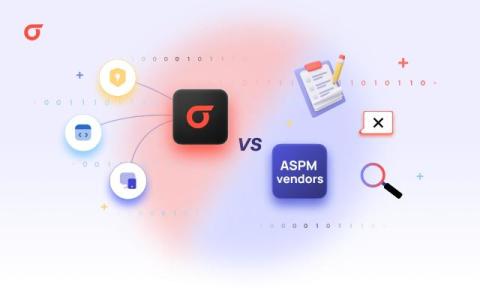
Appknox vs ASPM Vendors: What Application Security Posture Management Misses in Mobile App Security

Your ASPM dashboard shows your mobile security posture. The score reflects what your integrated testing tools found. It does not reflect what they could not test. For mobile apps, the gap between those two things includes the compiled binary, the third-party SDKs linked inside it, and what the app does at runtime on a real physical device. None of that data enters an ASPM dashboard built on source code scan results. The posture view looks complete. The coverage is not.

AI Export Controls and the Risk of Slowing Down Defense

The Trump administration has ordered Anthropic to restrict access to its most advanced AI models, Fable 5 and Mythos 5, citing national security concerns. Officials raised the possibility that these systems could be used by foreign actors to identify software vulnerabilities or support cyber attacks.