To protect the integrity and safety of their business-critical assets, cybersecurity must be a top priority for the oil and gas industry. Although they operate some of the nation’s most critical systems, securing these complex infrastructures can be a huge challenge.
Undoubtedly, today’s cyber threats are very fast and sophisticated. Even their detection and prevention is no longer an easy task. To prevent organizations from being a victim of cyber threats and attacks, a proactive cybersecurity approach must be used. That is the reason the Cyber Threat Intelligence (CTI) framework comes into place. CTI has become a critical tool for organizations trying to protect their networks and infrastructure.
It used to be that businesses needing their own large computer networks had to do everything themselves. They had to buy all of their servers, all of their networking appliances. They needed the physical space on premises for all of their datacenters, the HVAC people to keep everything cool, and the massive electricity bills to keep all of that going.
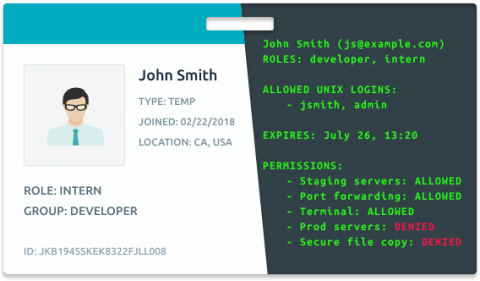
Are you an engineer or a manager working on a cloud application running in production? Do you have to type ssh or kubectl frequently to get things done? Does auditing, compliance, or access control sound mildly painful? This blog post is for you! In a world full of hackers, data breaches, and data privacy legislation, getting visibility into who is accessing your infrastructure (i.e., cloud or dedicated production environments where applications are hosted) and what they’re doing is vital.
Over the course of the past 10 years, traditional application development methodology (waterfall) has given way in favor of the more agile DevOps-centric methodologies focused on continuous delivery and continuous deployment. This trend was turbocharged in 2013 when Docker containers came onto the scene and ushered in the proverbial crossing of the chasm in container adoption. A recent Tripwire study revealed that 87% of surveyed organizations had containers deployed in production.
Service Organization Control 2 (SOC 2) is an auditing standard developed by the American Institute of Certified Public Accountants (AICPA). It is designed to ensure service providers and third-party vendors are protecting sensitive data and personal information from unauthorized access.
A selection of this week’s more interesting vulnerability disclosures and cyber security news. From time to time we hear stories of supply chain infections, and they tend to affect a low but still significant number of projects. A team though have gone a bit further in seeing how far they could take it. The results are sobering.
The agriculture sector is a staple of critical global infrastructure. We need food to survive as human beings, and a loss of access to these assets could be physically and emotionally detrimental to hundreds of millions of people. The sector is made up of numerous organizations that support critical functions such as growing crops, raising animals, and harvesting fish and other animals from a farm, ranch, or their natural habitats.
Being one of the most important practices in cyber security, vulnerability management is a rather involved process that requires your time and resources. In this article, we will take a closer look at how SOAR solutions can help you in the process of vulnerability management.