AI Priced by Productivity, Not Promises

Security operations teams are facing a structural problem that tools alone cannot solve. Alert volumes continue to rise. Telemetry is fragmented across cloud, SaaS, identity, and endpoint environments. Experienced analysts are stretched thin, and hiring additional talent has become increasingly difficult. At the Same time, boards are demanding faster response, stronger governance, and clear proof that security investments are delivering measurable value. AI is often presented as the answer.

Ep. 46 - Blueprint Thieves: Inside Iran's Industrial Espionage Machine

In this episode of _The Cyber Resilience Brief_, we break down the modern reality of *Iranian cyber warfare and industrial espionage*. Host Tova Dvorin and offensive security engineer Adrian Culley analyze the tactics, techniques, and procedures (TTPs) of *APT33, OilRig (APT34), and MuddyWater* — three of the most active Iranian state-sponsored threat actors targeting *energy, aviation, manufacturing, government, and critical infrastructure*.

Sam the AI SOC Analyst: How a Modern SOC Works When the AI is the Conductor

Security operations have never been more complex. Analysts face more alerts, more tools, and more pressure to make the right decision at the right moment. The work feels less like running a security program and more like trying to keep an orchestra in sync while each musician plays from a different sheet of music. This is the challenge Sam was created to solve. Sam, the Securonix AI SOC Analyst, acts like a skilled conductor guiding a symphony.

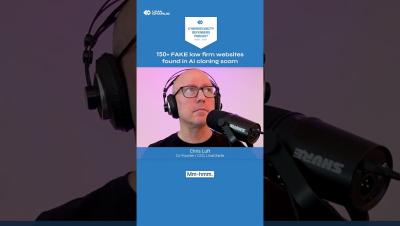
150+ FAKE law firm websites found in AI cloning scam #cybersecurity #ai #podcast

In this week's Intel Chat, Christopher Luft and Matt Bromiley discuss how attackers used AI to clone over 150 law firm websites, targeting fraud victims under the guise of offering legal assistance to recover lost funds. Chris points out how easy this has become with AI tools. Attackers can quickly clone a website, host it at a legitimate-looking domain, and start harvesting information. The episode also covers Russian cyber operations targeting the defense industrial base, Team PCP's campaign compromising 60,000+ servers, and exposed OLAMA AI infrastructure.

Who Controls LLMs? Digital Sovereignty, Policy, and AI Security Risks | India AI Impact Summit 2026

AI agents are quickly becoming first-class actors in the digital ecosystem—logging into systems, invoking multiple APIs, collaborating, and even interacting socially with other agents. In a panel discussion on “Enhancing Cyber Resilience Across the Digital Ecosystem”, the miniOrange Founder & CEO Mr. Anirban Mukherji highlighted why digital identity is now the foundation for securing agent-driven environments, especially as authentication and authorization protocols expand globally across platforms and enterprises.

How Smarter Security Economics Reduce Risk Without Breaking the SOC Budget

Most people don’t manage their personal finances by spending every dollar the same way. You don’t pay rent, groceries, retirement savings, and entertainment out of one undifferentiated bucket. You allocate intentionally covering daily necessities, protecting the future, and investing in things that improve quality of life. Yet that’s exactly how traditional SIEM pricing works. Every log costs the same. Every gigabyte is treated equally.

From DevOps to Runtime: Engineering the Right CWPP Strategy for Your Cloud Environment

Cloud-native architectures have fundamentally changed how organizations build, deploy, and scale applications. But they have also introduced new security challenges, especially when it comes to protecting workloads that span virtual machines, containers, Kubernetes, and serverless environments.

LimaCharlie + @claude Code: Admin Tasks, MITRE Coverage, and EDR Detections [Demo]

Claude Code runs directly inside the LimaCharlie UI, connecting to the MCP server and loading the skills needed to execute commands across your environment. In this video, you'll see it in action for common administrative tasks: identifying organizations and their IDs, pulling sensor counts for a specific org, and getting a full breakdown of containers by type. SOC managers can query this information conversationally rather than navigating multiple menus or writing custom scripts.