How to Set up the OTP Verification Plugin with WooCommerce Checkout Form?

The miniOrange OTP Verification Plugin validates customers' email addresses or mobile numbers by sending a One-Time Password (OTP) during the checkout process. By confirming the authenticity of the provided contact details, this plugin helps prevent fake orders, reduces fraud, and ensures secure transactions. In this video, we walk you through the complete step-by-step setup of the miniOrange OTP Verification plugin with the WooCommerce Checkout form. Follow along to enable OTP verification and enhance your store’s security.

EP25 - Identity is the attack vector w/ Udi Mokady

CyberArk founder and executive chairman Udi Mokady returns to Security Matters at a transformational moment—now as part of Palo Alto Networks, following the acquisition’s close on February 11. In this far‑reaching conversation, Udi and host David Puner explore why identity has become the attack vector for modern enterprises, driven by an unprecedented surge in human, machine and AI‑powered identities that attackers increasingly exploit.

Access control in cybersecurity

Access control defines who can access data and systems across an IT environment and under what conditions. Common models include DAC, MAC, RBAC, and ABAC, each supporting different governance and risk requirements. Strong access control depends on MFA, least-privilege enforcement, continuous audits, and clear visibility into sensitive data.


Why AI Agents are Next! The Death of APIs? #AI #Shorts

Why AI Agents are next is the biggest question in tech right now! In this breakdown, we look at how we're moving from static APIs to Agentic Interaction. While frameworks like MCP (Model Context Protocol) are gaining ground, the real challenge is creating a "Passport" system for AI agents from different companies to communicate securely. Key Insights: –Why AI Agents will replace traditional SaaS workflows.–The shift from deterministic APIs to dynamic agentic behavior.–The "AI Passport" – the missing piece for cross-company AI security.

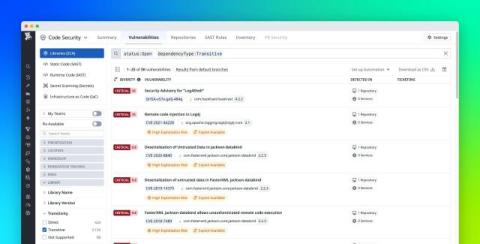
Remediate transitive vulnerabilities faster with Datadog Software Composition Analysis

Security teams are responsible for finding and remediating vulnerable dependencies within applications that are built from large ecosystems of frameworks, SDKs, and utilities. What makes this task especially challenging is that these dependencies can pull in dozens or even hundreds of transitive dependencies through complex dependency chains. Even when scanners identify what’s vulnerable, teams still often lack the information they need about the dependency chain to safely address the issue.

Solving the Hard Problems in Cybersecurity

We really enjoyed our conversation with Ed Amoroso from TAG Infosphere. We didn’t start Reach to chase headlines. We started it because the hard security problems weren’t getting solved. The important ones rarely are. Security only works when incentives are aligned to the customer’s actual outcome. Not noise. Not theater. Not (exclusively) shiny tools. That alignment is what makes the work worth doing.

G2 Names Feroot a 2026 Best Software Product in Data Privacy

We’re excited to share that Feroot has been named one of G2’s Best Software Products of the Year for 2026 in the Data Privacy category. This recognition is especially meaningful because it’s based on direct customer feedback. G2’s awards are powered by real-world reviews and outcomes, and we’re honored that customers chose to share their experience with Feroot. Even more humbling: our customers have given us an average rating of 4.9 out of 5 stars.

GrayZone Platform

BlueVoyant analyzed a sophisticated and extensive campaign that leverages corporate shell companies, professional infrastructure, and code-signing certificates to distribute potentially unwanted applications (PUAs). This operation has established a persistent, platform-like foothold on user systems through software that presents a façade of corporate legitimacy. It combines continuous system access with ongoing data collection.