Create a Tenant, Deploy Sigma Rules, and Enable GitHub Sync with @claude Code and LimaCharlie

This video shows how Claude Code handles a full tenant setup in a single workflow: creating a new organization, deploying Sigma rules, and enabling Git Sync, all in one run with LimaCharlie. Claude Code creates the organization, deploys the community Sigma rules available on the platform, and configures the Git Sync extension. That extension automatically creates a GitHub repository and syncs both the detection rules and the full tenant configuration to it, giving you version-controlled infrastructure from day one.

Reduce False Positives Automatically with @claude Code and LimaCharlie

Noisy alerts slow down every SOC. See how Claude Code with LimaCharlie can analyze your existing detection logic and trigger alerts to identify what's generating the noise and what can be done about it. After running the prompt, Claude Code reviews your rules and their trigger frequency, identifies the ones generating false positives, and produces specific recommendations for suppression rules to apply. In this example, it flags three rules and provides the logic to address each one, whether the issue stems from a syntax problem or detection logic that needs tightening.

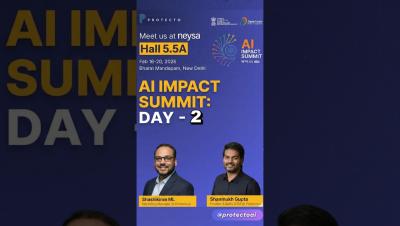
AI Security vs. Data Privacy: What you're getting WRONG (DAY -2) #shorts #ai

Day 2 at the AI Impact Summit was all about debunking myths. One major takeaway from our conversations today: Most leaders think AI security is just about stopping 'bad prompts.' But the real danger is exposing sensitive data to the model in the first place. If you aren’t sanitizing your data before it hits the AI, you’re leaving the door wide open. We’ve been showing attendees at Bharat Mandapam how Protecto bridges the gap between basic AI security and true Data Privacy.

From Chaos to Clarity: Your Guide to Understanding and Identifying CUI

The webinar "From Chaos to Clarity: Your Guide to Understanding and Identifying CUI" focused on controlled unclassified information (CUI) and its importance for government contractors. Megan Kennett, from Neosystems, hosted the session, which featured experts Reagan Edens, Jim Goebel, and David Carlino. The panel discussed the basics of CUI, including its definition, types, and the lifecycle approach to managing it. They emphasized the need for contractors to understand their contractual obligations and the authorized flow of CUI.

NIST AI Risk Management Framework Insights for Cybersecurity

AI is now widely used across security, automation, and digital infrastructure. With that shift, risk is no longer limited to technical failures – it also includes trust, data misuse, and system authenticity. This article explains what the NIST AI Risk Management Framework is, how AI risk affects security, the key risk categories, and how cybersecurity infrastructure supports trustworthy AI systems.

Protecting Remote Endpoints: Backup Best Practices for a Distributed Workforce | BDRShield Webinar

YouTube Description With remote and hybrid work becoming the new normal, laptops and desktops are now the most vulnerable — and most overlooked — layer of business data protection. In this practical webinar, the BDRShield by Vembu team explains how IT teams and MSPs can protect remote endpoints reliably without disrupting users or increasing operational complexity. Speakers: Mani Subramanian Product Manager, Vembu Technologies What You’ll Learn.

Why a global identity strategy requires local governance

For years, identity has been treated as a supporting function, authenticating users, gating access, and satisfying audit requirements. Important, but rarely foundational. That era is over. In modern enterprises, identity has become the infrastructure on which critical systems depend. Every workload, certificate, API, automated process, and AI-driven action must rely on identity to operate safely and predictably. When identity fails, those systems become exposed—and often stop behaving as expected.

The Mobile AppSec Evaluation Guide for Security Leaders

Mobile security feels mature. Enterprises scan frequently, track findings, and report posture upward. Yet under regulatory scrutiny, cracks appear. This gap between perceived security and defensible governance is where mobile AppSec quietly fails. The illusion isn’t that security isn’t happening. It’s that it isn’t aligned with how regulated risk actually operates.