The Big Fix 2022 - Getting started with VS Code IDE security fixes

The Big Fix brings together developers, DevOps, and security practitioners of all skill levels to help make the internet more secure. Our goal is to make security 100x better in 2022 by finding and fixing 202,200 security vulnerabilities! Join us to help find and fix security vulnerabilities while making friends and winning swag. In this short video Developersteve will help you get started finding security vulnerabilities in your applications using VS Code's Snyk extension to scan a project's manifest (open source libraries!) as well as your own code (static application security testing!)

What Are Azure AD Custom Security Attributes?

Microsoft released a valuable new Azure feature in December of 2021: custom security attributes. This feature is still in preview. Custom security attributes enable organizations to define new attributes to meet their needs. These attributes can be used to store information or, more notably, implement access controls with Azure attribute-based access control (ABAC). Azure ABAC, which is also in preview, enables an organization to define access rules based on the value of an object’s attribute.

CMMC Town Hall With Amira Armond, Kieri Solutions & Jeff Dalton, CMMC AB | 2/9/22 | NeoSystems

NeoSystems CMMC Town Hall Series: Join NeoSystems’ Chief Information Security Officer, Ed Bassett, for our weekly CMMC Town Hall designed for the Defense Industrial Base and GovCon community. Each session features special guests and offers an opportunity for attendees to ask questions regarding CMMC and cybersecurity. Topics covered include CMMC compliance requirements, how to prepare for CMMC certification, and the latest updates from the CMMC AB.

How federal agencies can revamp their mobile security posture

Cybersecurity is an increasing concern for the federal government, particularly with a larger remote workforce to manage than in the past. Changes in the distributed nature of IT networks make it even more critical to stay ahead of newer threats like ransomware and spyware. Lookout’s Vice President for Public Sector Tony D’Angelo, in a new CyberScoop interview, highlights the importance of reprioritizing mobile device security to establish a more secure network security posture. D’Angelo explains how mobile threat defense solutions help security leaders safeguard sensitive enterprise data from cyberthreats that exploit users, apps and devices. He also highlights endpoint detection and response strategies that elevate mobile security when implementing a zero-trust architecture. Watch the full interview with Tony D’Angelo and learn more about reprioritizing mobile device security to establish a more secure network security posture.

7 Best Practices for Effective Third-Party Cyber Risk Management

While the digital world provides many benefits, there are also various risks involved within the third-party risk category. Also, the category of the risks can be quite long i.e. financial, environmental, security risk and reputational. Firms are often required to open their network and share data related to the company, employees, customers etc. which puts them at significant risk of cybersecurity issues, breaches and loss of sensitive data.

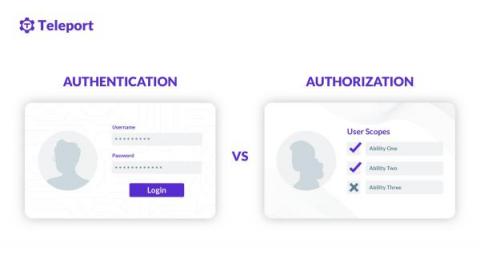
Authentication (AuthN) vs. Authorization (AuthZ)

Often referred to as AuthN (authentication) and AuthZ (authorization) in the modern access control paradigm, both authentication and authorization are a method to control access to resources. These resources can be files, programs, web applications, mobile applications, operating systems, network devices, etc. Let’s explore three common scenarios on how authentication and authorization are involved. These are the few sample cases of authentication vs. authorization.

Cloud Threats Memo: Why Multi-Factor Authentication is a Must-Have

Despite the growing interest in cloud accounts by opportunistic and state-sponsored actors, too many organizations fail to implement basic security measures to protect their cloud apps, such as multi-factor authentication (MFA) for administrators and users. This is the concerning finding of a report recently released by Microsoft, according to which just 22% of Azure Active Directory customers implement strong authentication mechanisms such as MFA or passwordless authentication.

Application Layer Infrastructure Visibility in IaaS

The migration to cloud provides faster time to deployment and elasticity, but often at some cost and complexity to infrastructure control and visibility. A concrete example we can use is a deployment of web servers with rational security group configuration, in light of the recent Log4Shell vulnerability. While limitations are similar in all IaaS environments, consider the following AWS architecture with focus on the web servers running on EC2 instances.