Malware has come a long way since it first made the scene in the late 1990s, with news of viruses infecting random personal computers worldwide. These days, of course, attackers have moved beyond these humble roots. Now they deploy a variety of innovative techniques to extract large amounts of money from businesses around the world. A similar development is taking place with malware’s upstart cousin – the emergence of malicious packages being uploaded to package registries.
Organizations have started considering cybersecurity as a top priority lately. The amount of money invested in IT infrastructure is increasing at an exponential rate. Further, dedicated teams are formed to monitor and optimize the performance of the different solutions that each organization has in its environment. Similarly, when it comes to cybersecurity, it’s become essential to evaluate and quantify the security posture of every organization.
2023 might be a really important year for real-time payments (RTP) development in North America. FedNow, a real-time payments service, is on track to go operational in 2023 in the USA, while the Real-Time Rail (RTR) payment system will be fully launched in Canada, also in 2023. Currently, in their test phases, these payment systems will go mainstream next year, making faster payments more accessible to smaller financial institutions and businesses.
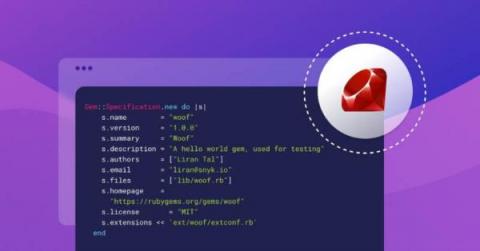
In this post, we’ll look at the security blindspots of lockfile injection that a Ruby gem might expose via its Gemfile.lock. As a prelude to that, we will open up with a brief introduction to Ruby and third-party dependencies management around RubyGems and Bundler. Web developers often work on Ruby projects, but are mostly referring to them as the popular open source web application framework Ruby on Rails.
The world of enterprise cybersecurity is exceedingly dynamic. In a landscape that is ever-changing, security professionals need to combat a class of evolving threat actors by deploying increasingly sophisticated tools and techniques. Today with enterprises operating in an environment that is more challenging than ever, Security Information and Event Management (SIEM) platforms play an indispensable role.
In a previous post my colleague spoke about how ensuring devices on your network is a great way to minimize the attack surface of your infrastructure. Organizations like the Center for Internet Security (CIS) provide guidelines on how to best configure operating systems to minimize the attack surface. The CIS calls these “benchmarks.”