How SPL2 Simplifies Security Investigations and Admin Workflows in Splunk

Discover how SPL2 (Splunk Processing Language 2) is transforming the way organizations manage data at scale. In this demo, we dive deep into how SPL2 addresses modern data challenges by offering a unified, SQL-like syntax and powerful new tools like the Module Editor. With syntax that’s instantly familiar to current users, SPL2 removes barriers to adoption and lets teams leverage its power from day one.

Best Cloud Workload Protection Solutions: A Runtime-First Evaluation Guide

What is a cloud workload protection platform (CWPP)? Security for the workloads actually running in your cloud—VMs, containers, and serverless functions doing real work. Unlike posture management (CSPM) that checks configurations, CWPPs monitor processes, network connections, and application behavior to catch threats as they happen. What’s the difference between CSPM, CWPP, CNAPP, and CADR? CSPM scans cloud settings for misconfigurations. CWPP protects running workloads.

Meet GitGuardian's Machine Learning-Powered Risk Scoring

The GitGuardian Platform now automatically ranks every secrets incident with a risk score from 0–100, turning alert floods into a prioritized, trustworthy work queue. Scores are computed from incident context (like validity, exposure, where it was found, and exploitability) and build on existing ML capabilities like Secret Enricher and our False-Positive Remover, which cuts false positives by 80%+.

Best ADR Security Solutions in 2026: Why Full-Stack Visibility Beats Siloed Alerts

What is ADR (Application Detection & Response)? A security tool that monitors application-layer behavior—API calls, function execution, code paths—to detect and respond to threats in real-time. Different from EDR (endpoint-focused) or CDR (cloud infrastructure-focused), ADR sees what’s happening inside your applications. Why do most ADR solutions fail? They only see one layer.

GDPR compliance for US companies: Step-by-step guide

Due to growing awareness of data privacy risks, organizations face mounting pressure from regulators to safeguard sensitive personal information. This can be particularly challenging for US companies, which must adhere to both domestic regulations, such as the CCPA and HIPAA, as well as international frameworks in their target global markets.

How to Build an Enterprise API Security Strategy (Beyond Gateways and Checklists)

In the last few years, many of the largest data exposures haven’t come from broken pages or leaked databases. They’ve come from APIs. Public reports around large-scale scraping incidents at companies like Meta and LinkedIn showed how exposed APIs, not traditional web flaws, were used to pull massive volumes of user data at scale. This isn’t an edge case anymore. APIs now sit at the center of how enterprises move data between applications, partners, and customers.

UNO reverse card: stealing cookies from cookie stealers

Criminal infrastructure often fails for the same reasons it succeeds: it is rushed, reused, and poorly secured. In the case of StealC, the thin line between attacker and victim turned out to be highly exploitable. StealC is an infostealer malware that has been circulating since early 2023, sold under a Malware-as-a-Service (MaaS) model and marketed to threat actors seeking to steal cookies, passwords, and other sensitive data from infected computers.

What is Web Application Scanning? A Guide to Securing Your Web Apps (2026)

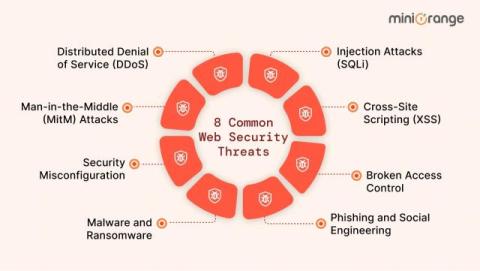
As per Verizon’s 2025 DBIR, system intrusion, social engineering, and web application attacks form: This makes web applications one of the most common and important egress points into your business systems and customer data, and that’s why even a single undetected vulnerability here can cascade into revenue-devouring breaches, hefty compliance violations, and reputational damage that may as well take years to repair.