Top Open Source Cloud Security Tools for 2026

Do open source tools give you full Kubernetes attack coverage? Kubescape, Trivy, and Falco each excel in their lane—posture, vulnerabilities, and runtime—but none of them builds a complete attack narrative on its own. Deploying all three still leaves you with evidence fragments rather than a connected incident story. Why can’t siloed alerts keep up with real attacks?

How to Compare Cloud Security Tools for Incident Response

Why do traditional incident response playbooks break in Kubernetes? Pods spin up and disappear in seconds, destroying forensic evidence before you can investigate. Attackers exploit service account tokens and move laterally through east-west traffic that perimeter tools never see—over 50% of ransomware deploys within 24 hours of initial access, leaving no time for manual investigation methods built for static servers.

Best AI Intrusion Detection for Kubernetes: Top 7 Tools in 2026

Why do traditional intrusion detection systems fail in Kubernetes? Legacy IDS tools were built for static servers with fixed IPs and clear network perimeters—Kubernetes breaks all of those assumptions. Ephemeral pods, east-west traffic, encrypted service mesh communication, and dynamic IP addresses make perimeter-focused, signature-based detection effectively blind inside clusters.

Top Vulnerability Prioritization Tools Compared: 2026 Edition

Why do 3,000 CVEs not mean 3,000 real problems? Most vulnerability scanners flag every CVE in your container images without checking whether the vulnerable code is actually loaded and executed at runtime. Only 2–5% of alerts typically require action, which means your team is likely spending days triaging theoretical risks while genuinely exploitable vulnerabilities stay buried.

What is zero trust security in SaaS applications? A practical implementation guide

Zero trust used to sound like yet another security buzzword. In SaaS environments, it has turned into something far more practical: a way to keep your business moving fast without assuming that anything or anyone is safe just because they are “inside” your systems. Zero trust in SaaS is about treating every login, every device, and every request as something you verify in real time instead of something you blindly trust because it passed a VPN check once.

CVE-2026-27739: Angular SSR Request Vulnerability Enabling Server-Side Request Forgery

A critical vulnerability has been discovered in Angular Server-Side Rendering (SSR) that could allow attackers to manipulate request handling and trigger unauthorized server-side requests. Tracked as CVE-2026-27739, the vulnerability arises from how Angular SSR reconstructs request origins using HTTP headers such as Host and X-Forwarded-*. In affected versions, these headers were not strictly validated before being used to build request URLs.

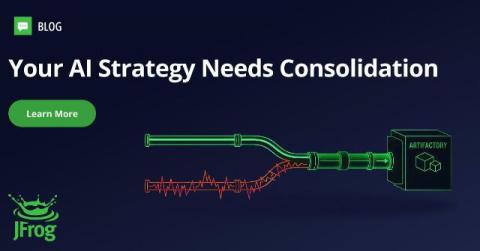
Trusted AI Adoption (Part 1): Consolidation

Imagine your lead Software Engineer walks into your office and says, “Good news! I just deployed that critical update to production. I wrote the code on my personal laptop, didn’t run it through CI/CD, skipped the security scan, and just copied the files directly to the server with a USB drive.” You would fire them. Or you would revoke their access immediately.

OpenClaw: Cato Governance Controls and Sector Exposure Insights from the Cato SASE Platform

Agentic AI does not just answer, it acts. The moment an agent has a reachable control plane, you have effectively created a “remote hands” interface into your environment. In our recent blog post, “When AI Can Act: Governing OpenClaw,” we explained why this shift breaks old security assumptions and why governance must be continuous, enforced, and context-aware rather than a one-time checklist.