Business Continuity for Law Firms: Protecting Billable Hours and Court Deadlines

Law firm economics are unforgiving. According to the Clio Legal Trends Report, the average attorney bills only 2.5 hours per 8-hour workday. When IT systems fail, that already-thin margin disappears entirely. Consider a 20-attorney firm with average billing rates of $350 per hour.
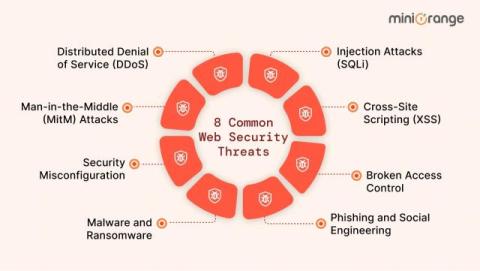

Top 8 Web Security Threats Every Enterprise Must Know

Broadly defined, web security threats are any malicious attempts to gain unauthorized access to a computer system, network, or data via the internet. These website security issues range from automated bot attacks to sophisticated social engineering. Essentially, any vulnerability in a web application or browser that a cybercriminal can exploit falls under this category. Understanding these web security threats is the first step toward building a resilient defence.

Announcing the Custom SAPA Agent: Security Awareness Measurement Built for Your Environment

Security awareness programs are built on measurement. Before you can reduce human risk, you need a clear understanding of where knowledge gaps exist across your workforce. For many organizations, that process starts with a baseline assessment. For years, KnowBe4’s Security Awareness Proficiency Assessment (SAPA) has provided that foundation.

Yes, You Need AI to Defeat AI

Long-time followers of mine know that I am not an AI hype person. Some people might even call me an AI critic. I prefer to call myself an AI realist. I do not think AI will kill us all (despite our best efforts to bypass all guardrails and common sense). I do not think AI will replace all jobs. I do not think AI will replace all cybersecurity jobs. But I do think AI allows improvements in many areas, including cyber defenses, over traditional tools and techniques.

Introducing System Prompt Hardening: production-ready protection for system prompts

Today, we’re launching System Prompt Hardening, Mend.io’s new capability that defends the hidden instructions that control how your AI systems behave. Unlike user-facing prompts, system prompts live behind the scenes, and when attackers manipulate them, the result can be data leaks, policy bypasses, or unsafe model behavior. System prompt hardening stops those attacks at the source and gives security, engineering, and risk teams a practical, auditable way to secure AI in production.

When Disruption Becomes Risk: Why Law Firms Can't Afford to Go Dark

For generations, law firms have assessed risk through precedent, probability and professional judgement. These disciplines are still important, but on their own they no longer describe the reality law firms now face. A different category of risk has moved into the centre of senior decision making. It is not abstract, theoretical or easily deferred. It cuts across practice areas, firm size and seniority. When it materialises, it does not wait for alignment or deliberation.

Connected Vehicles, Accelerating Risk: Inside the Cyber Threats Facing Automotive

The automotive industry is changing faster than ever, with smarter factories, connected vehicles, digital supply chains, and software-driven everything. But as the industry accelerates into this new era, something else is racing alongside it: cyber threats. Over the past year, Bitsight Threat Intelligence data has shown a sharp rise in ransomware activity targeting companies across the auto ecosystem. And what’s striking is how often the same names keep appearing.

Why well-managed endpoints still get breached: The 2026 reality

As endpoints became more powerful, more mobile, and more exposed, they also became more prone to attacks. Endpoints remain one of the most targeted entry points for attacks. Attacks today are no longer random; they are targeted, deliberate, and increasingly powered by automated AI discovery tools that hunt for unmanaged gaps. Malware, ransomware, and phishing-based intrusions continue to increase, and their first level of interaction often happens on an endpoint.

How to Compare Cloud Security Tools for Incident Response

Why do traditional incident response playbooks break in Kubernetes? Pods spin up and disappear in seconds, destroying forensic evidence before you can investigate. Attackers exploit service account tokens and move laterally through east-west traffic that perimeter tools never see—over 50% of ransomware deploys within 24 hours of initial access, leaving no time for manual investigation methods built for static servers.

Best AI Intrusion Detection for Kubernetes: Top 7 Tools in 2026

Why do traditional intrusion detection systems fail in Kubernetes? Legacy IDS tools were built for static servers with fixed IPs and clear network perimeters—Kubernetes breaks all of those assumptions. Ephemeral pods, east-west traffic, encrypted service mesh communication, and dynamic IP addresses make perimeter-focused, signature-based detection effectively blind inside clusters.