This year marks the release of the first 2022 Vulnerability Management Report from Fortra. The report, which was conducted in September 2022, is based on a comprehensive survey of over 390 cybersecurity professionals with the goal of gaining insights into the latest trends, key challenges, and vulnerability management solution preferences.
The ISO 27001 is one of the most recognized security standards for private sector organizations across the globe and is often required by prospective enterprise customers, helping organizations unlock new business opportunities. ISO 27001 was recently updated along with its companion guidance standard ISO 27002. The updated title for this standard is ISO/IEC 27001:2022 Information Security, Cybersecurity, and Privacy Protection.
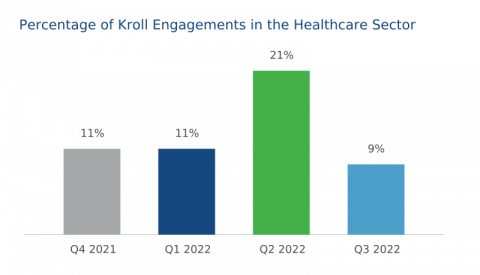
A review of recent Kroll incident response cases consistently proves that the healthcare industry is one of the most frequently targeted sectors. This observation mirrors what is experienced by national cybersecurity agencies as multiple warnings have been launched during 2022, highlighting how ransomware gangs and nation state actors are now aggressively targeting healthcare institutions.
After a two-year hiatus (virtual in 2020 and hybrid in 2021), AWS re:Invent was back in person this year in its full glory. Over 52,000 people attended — more than we saw at RSA (26,000) and Blackhat USA (21,000) combined this year.
Controlling and filtering traffic when containerizing a workload within Kubernetes Pods is just as crucial as a firewall in a more traditional network setup. The difference is that, in this scenario, those capabilities are provided by the Kubernetes NetworkPolicy API. This article will explore Kubernetes NetworkPolicy by creating an example network policy and examining its core parameters. Then, we’ll look at some common NetworkPolicy use cases and learn how to monitor them using kubectl.