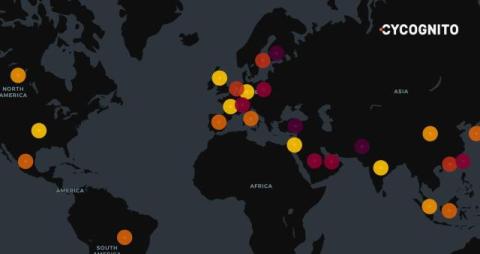
Emerging Threat: Microsoft SQL Server Elevation of Privilege Vulnerability (CVE-2026-21262)

CVE-2026-21262 is an elevation of privilege vulnerability affecting Microsoft SQL Server. The issue is caused by improper access control within SQL Server components, allowing an authenticated attacker to elevate privileges over a network.

The best compliance management software for 2026

In 2026, compliance work shouldn’t mean chasing screenshots, living in spreadsheets, or chaotic fire drills to get compliant. If you’re still tallying up hours upon hours of compliance work, it’s time to find a compliance management software that helps you automate compliance, manage risk, and prove trust. ‍ Not sure where to start?

A Comprehensive Guide to Continuous Threat Exposure Management (CTEM)

Continuous Threat Exposure Management is a continuous security framework for identifying, assessing, validating, and reducing the exposures that matter most to an organization. Rather than treating every exposure, alert, or control issue as equally urgent, CTEM helps organizations focus on the exposures that are actually reachable, relevant to likely attack paths, and meaningful in a business context.

Inside Fidelis CNAPP: A Detailed Look at the Features That Strengthen Cloud Security

Cloud adoption is accelerating, but cloud security complexity is growing just as fast. Security teams now manage hybrid workloads, multi-cloud environments, containerized applications, and sensitive cloud-native data. Traditional tools designed for on-prem environments often struggle to provide consistent visibility across these dynamic systems. This creates operational pressure. Teams deal with fragmented alerts, inconsistent policies, and uncertainty about real cloud risk exposure.

Meet HIPAA, GDPR, SOC 2, and NIS 2 requirements with Acronis Cyber Protect disaster recovery

You might feel sure that your organization can recover quickly from a cyberattack. But can you prove it? To remain compliant with major regulatory requirements, you have to be able to demonstrate recoverability. Compliance frameworks worldwide, including HIPAA, GDPR, SOC 2 and NIS 2, are increasingly requiring that organizations prove they can recover from system disruption, cyberattacks and data loss quickly and reliably. In other words, recovery time must be auditable.

FBI: Phishing Attacks Are Impersonating City and County Officials

The US Federal Bureau of Investigation (FBI) has issued an advisory warning of a phishing campaign that’s impersonating city and county officials to send phony requests for permit fees. “Individuals and businesses with active applications for land-use permits are being targeted by criminals impersonating city and county planning and zoning board officials, fraudulently requesting fees associated with these permits,” the FBI says.

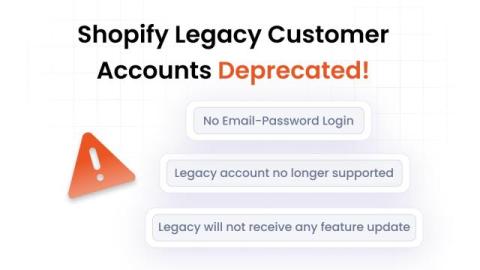
Shopify Legacy Accounts Are Deprecated: What Every Merchant Needs to Know Right Now

Shopify has officially deprecated Legacy Customer Accounts as of February 2026, marking a major shift in how customer authentication works across Shopify stores. It has also been confirmed that a final sunset date will be announced later in 2026, after which legacy templates will be locked from editing and eventually removed.

The Need for Infrastructure Identity | Teleport x The Cyber Hut

Most organizations have identity over here and infrastructure over there — and they don't talk. By default, infrastructure has no identity. It's naked. Ev Kontsevoy explains why bringing identity into your infrastructure stack is a prerequisite for safe AI adoption — and what a trusted state actually looks like.

How Do I Send a Secure Email in Outlook?

Sending an unsecured email can be likened to writing sensitive information on a sticky note and leaving it on someone else's desk: anybody can intercept and share that information. Fortunately, there are ways to ensure your emails are safe from the prying eyes of hackers through encryption, meaning your message — no matter how sensitive — is seen only by the intended recipient.