Shopify Legacy Accounts Are Deprecated: What Every Merchant Needs to Know Right Now

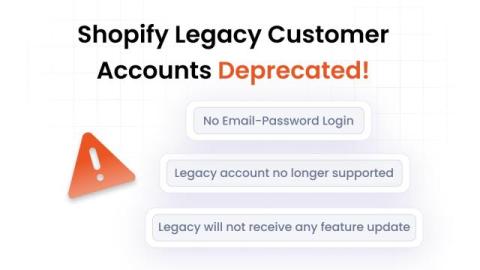
Shopify has officially deprecated Legacy Customer Accounts as of February 2026, marking a major shift in how customer authentication works across Shopify stores. It has also been confirmed that a final sunset date will be announced later in 2026, after which legacy templates will be locked from editing and eventually removed.

The Need for Infrastructure Identity | Teleport x The Cyber Hut

Most organizations have identity over here and infrastructure over there — and they don't talk. By default, infrastructure has no identity. It's naked. Ev Kontsevoy explains why bringing identity into your infrastructure stack is a prerequisite for safe AI adoption — and what a trusted state actually looks like.

How Do I Send a Secure Email in Outlook?

Sending an unsecured email can be likened to writing sensitive information on a sticky note and leaving it on someone else's desk: anybody can intercept and share that information. Fortunately, there are ways to ensure your emails are safe from the prying eyes of hackers through encryption, meaning your message — no matter how sensitive — is seen only by the intended recipient.

5 Key Benefits of a Cloud Data Security Solution

Implementing cloud security policies and technologies has seen sustained growth in recent years. However, despite the widespread adoption of cloud security services, many companies have yet to fully recognize the critical importance of cloud security or still find themselves wondering: what is cloud security and why should it matter to their business? Migrating to the cloud provides organizations with the ability to move faster and more efficiently.

MFA Best Practices 2026: From Basic to Phishing-Resistant Authentication

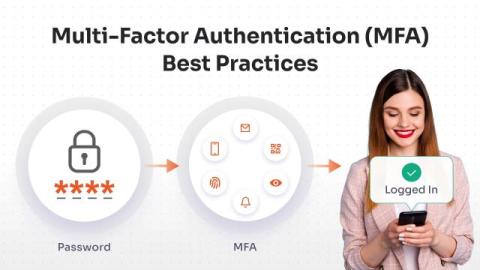
In 2022, Uber's systems were breached by an 18-year-old. Multi-Factor Authentication (MFA) was active, but the attackers flooded an employee's phone with push requests until they approved one, just to stop the annoyance. Authentication worked as designed, and the attacker got in. This is, in general terms, an MFA fatigue attack. Fast forward to Q1 2025. Rapid7 found that more than 56% of all compromises resulted from stolen credentials where no MFA was in place.

Stop Local App Data Leakage | Falcon Data Protection Demo

CrowdStrike Falcon Data Protection enforces content-aware controls on local thick-client applications to prevent sensitive data from leaving the environment. Real-world exfiltration attempts across common desktop applications including chat tools, note-keeping apps, and email clients are identified and blocked beyond the browser. Custom Local Application groups, Classification Rules, and Data Security Policies give defenders flexible, precise control over how sensitive data is handled across the endpoint.

How Scammers Use Travel SIM Sales to Steal Identity Documents

Most organisations spend serious money on firewalls, endpoint protection, and threat monitoring. Yet one of the most commonly exploited attack surfaces gets far less attention: the APIs quietly running underneath almost every modern application. APIs are the connective tissue of today's digital infrastructure. They allow apps to talk to each other, enable third-party integrations, and power the real-time data exchanges that businesses depend on daily. They are also a favourite target for attackers who know that many organisations have not secured them properly.

How to evaluate cybersecurity and fintech platforms before trusting them with your data

When we think about cyberattacks, we often imagine a scene from a movie where someone in a dark room is typing 300 words per minute to bypass a firewall. The reality of cybersecurity is a lot more boring, and in a way, more dangerous. Most major data breaches today start with very mundane access paths. We're talking about basic credential theft, simple phishing emails, or weak account recovery flows that a teenager could figure out. Misconfigurations in cloud storage-where someone simply forgets to lock the digital door-routinely cause more damage than exotic, high-tech exploits.

The Hidden Security Risks Living Inside Your APIs

Most organisations spend serious money on firewalls, endpoint protection, and threat monitoring. Yet one of the most commonly exploited attack surfaces gets far less attention: the APIs quietly running underneath almost every modern application. APIs are the connective tissue of today's digital infrastructure. They allow apps to talk to each other, enable third-party integrations, and power the real-time data exchanges that businesses depend on daily. They are also a favourite target for attackers who know that many organisations have not secured them properly.