Magecart Attack: Hacker steals credit card info from Canada's largest alcohol retailer

The LCBO, a major Canadian retailer, recently experienced a cybersecurity breach that compromised the personal information of thousands of customers. The incident, which was discovered on January 10th, affected the client-side of the company’s website through which LCBO conducts online sales. It resulted in the unauthorized access of sensitive information such as names, addresses, email addresses, LCBO.com account passwords, Aeroplan numbers, and credit card information.

Introducing the ability to build apps with Tines

Companies depend on Tines to protect their business through mission-critical automation workflows. Since the earliest versions of Tines, we’ve enabled users to put humans in the loop through forms and prompts. Workflows pause until a person completes an action via an email or messenger prompt. But these features felt limited, with the need for additional human interactions to take place elsewhere creating time-consuming friction.

Predicting which hackers will become persistent threats

Websites are central to business operations but are also the target of various cyber-attacks. Malicious hackers have found several ways to compromise websites, with the most common attack vector being SQL injection: the act of injecting malicious SQL code to gain unauthorized access to the server hosting the website. Once on the server, the hacker can compromise the target organization's website, and vandalize it by replacing the original content with content of their own choosing.

All the Proxy(Not)Shells

On September 28th it was disclosed by GTSC that there was a possible new zero day being abused in the wild beginning in early August. Although this campaign looked very similar to the previously abused vulnerability in Microsoft Exchange, dubbed ProxyShell at the time, comprising 3 CVEs (CVE-2021-34473, CVE-2021-34523 and CVE-2021-31207) that when combined enabled an adversary to gain remote access to an Exchange PowerShell session that may be abused.

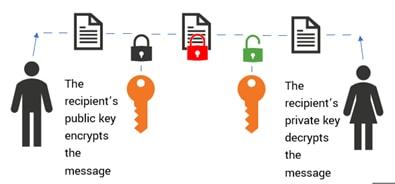
Post-Quantum Cryptography & Preparing for Post-Quantum Encryption (PQE)

Quantum computing is an emerging technology that, in due time, will enable amazing power for humanity. With good comes bad. Bad actors are likely to harness quantum computing to distrust, steal or cause harm — threatening our global ways of living and working. We must help federal agencies and commercial enterprises to build quantum safety and quantum resilience against a worst-case scenario. Fortunately, the threat is being recognized. On December 21, 2022, the U.S.