How to Seize FSMO Roles

Shifting a Flexible Single Master Operations (FSMO) role from one domain controller (DC) to another is normally done through a role transfer operation. But if the DC that holds an FSMO role experiences a serious failure that takes it out of service, you must instead seize its FSMO roles and reassign them to a functioning DC. For example, you need to seize an FSMO role if the current role holder: Important: After you seize an FSMO role from a DC, ensure that it is never reconnected to the network.
Tines vs Python: Understanding alternative approaches to automation

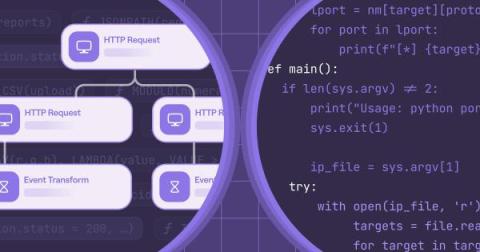
We're sometimes asked, "Can you run Bash or Python scripts natively in Tines?" and today, we're sharing the answer, and weighing in on the debate between full-code, low-code and no-code automation. The short answer is yes, you can run scripts and linux commands natively in Tines, however, you might not necessarily want to. Many of our customers avoid doing so for security, usability and performance reasons. Let's take a closer look at some of these potential pitfalls.

Arctic Wolf Always Ahead: Holiday Threats

Arctic Wolf understands that the holiday season is a stressful time. Our Chief Product Officer Dan Schiappa explains in this episode of Always Ahead why the holiday season is also a lucrative time for threat actors, who are looking to target organizations who may have let their guard down as they celebrate, and what organizations need to know to stay protected.

Weekly Cybersecurity Recap December 8

This week’s data breaches contained significant impact figures from around the world. Malware on a vendor’s computer inadvertently breached Japan’s Line Messenger. New York’s East River Medical Imaging suffered the loss of employee and patient record information. The Pan-American Life Insurance Group faces a 105k record data breach through MOVEit.

A Guide to Third-Party Risk Management in the Financial Sector

In today's financial landscape, businesses are interconnected, and outsourcing and partnerships are necessary—meaning managing risks associated with third-party vendors is pivotal. Whether you're a small community bank or a multinational financial conglomerate, mastering third-party risk management is vital to safeguarding your institution against the vulnerabilities that third parties can introduce.

Experts Urge Complete Cybersecurity Defense-2.6 Billion Records Exposed by Cyberattacks in 2 Years

Cybersecurity breaches are at epidemic proportions; in the last two years, cybercriminals have stolen over 2.6 billion consumer records from thousands of organizations. The breaches target more than individuals—they target data from healthcare networks, academic institutions, small businesses, and governments. The attacks come at a destructive cost. Where criminals use personal information for extortion, and the trust of the public is ever-decreasing.

Unlock the Power of Your SIEM with Co-Managed SOC

Security information and event management (SIEM) systems play a pivotal role in cybersecurity: they offer a unified solution for gathering and assessing alerts from a plethora of security tools, network structures, and software applications. Yet, the mere presence of a SIEM isn't a magic bullet. For optimal functionality, SIEM systems must be appropriately set up, governed, and supervised round-the-clock.

What Is Quishing?

QR code phishing, most commonly referred to as “quishing,” is a type of phishing attack that tricks users into scanning QR codes to steal personal information such as login credentials or credit card numbers. When a user scans a QR code created for a quishing attack, they are taken to a malicious website that either downloads malware on their phone or asks for their personal information.

Six Top Tips For Holistic AppSec and Software Supply Chain Security

Developing applications and working within the software supply chain requires hard skills such as coding and proficiency in programming languages. However, protecting the software supply chain also requires some softer skills and an openness to strategies and tools that will strengthen your security posture. In this two-part series, we will discuss these considerations and how they support a holistic approach to application security and software supply chain security.