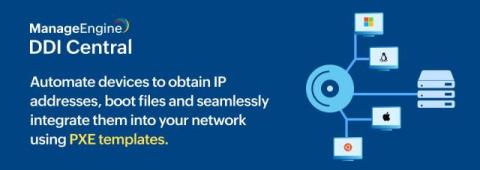
What is PXE and why do devices need it?

Organizations in various sectors require multiple hardware assets. When organizations distribute assets to their employees, many have to deploy the boot files manually in individual devices, a tedious and time-consuming process—and especially when it’s necessary for 100 or more employees. ManageEngine DDI Central, a centralized platform for managing DNS, DHCP, and IPAM, provides you with templates so you can efficiently implement one-time configurations for your devices.


CultureAI raises $10 million in Series A funding to evolve the way organisations manage human risk

CultureAI has raised $10 million in capital. Mercia Ventures and Smedvig Ventures led the funding round. This funding will power CultureAI's product development and market expansion plans.

Best Practices for Cybersecurity in .NET Applications

In today's digitally interconnected world, cybersecurity is not just a priority-it's a necessity. For developers working with.NET applications, ensuring robust security measures can protect sensitive data, maintain user trust, and prevent costly breaches. Here are the essential best practices for enhancing cybersecurity in.NET applications. Keeping your.NET applications updated is crucial for maintaining security. For example, migrating from.NET Core 3.1 to.NET 6 can bring significant security enhancements and performance improvements.

How to Stop Data Leaks in Their Tracks

Data leaks are a growing concern for organizations due to the rising volume of sensitive information stored digitally. Leaks occur when sensitive data is inadvertently exposed, and they can easily lead to cyber attacks, reputational damage, and enormous financial costs. The best way to protect against them is to stop them from occurring in the first place. In this blog, we’ll delve into the common causes of leaks and best practices to bolster data security and prevent data leaks effectively. ‍

Looking for a Job in Cyber? Tips and Advice From the Pros

A career in cybersecurity can be rewarding, challenging, and, frankly, lucrative. But it's not the easiest industry to break into: the skills required for a cybersecurity role are both niche and specific, the bar for entry is relatively high, and there are very few entry-level jobs available. But don't be disheartened. The cybersecurity industry is crying out for fresh talent. With hard work, a little luck, and the right advice, you can set yourself up for a long and satisfying career in cybersecurity.

CIO POV: Rethinking Data Security Post-Snowflake Customer Attacks

Watching the recent Snowflake customer attacks unfold felt a bit like rewatching a horror movie with predictable attack sequences and missed opportunities to run to safety. But this time, the ending was far more devasting. More than 100 organizations were exposed, and many are now grappling with the impacts of data theft and extortion in what some are calling one of the largest breaches in history.

Navigating Digital Nightmares: A Survivor's Battle Against Online Harassment

Technology can serve as a double-edged sword for women grappling with domestic abuse: while it has the potential to save lives, it also has the capacity to lay bare one's most intimate vulnerabilities. One such harrowing story comes from a survivor (which we will call Bridget to protect her anonymity), who faced a nightmare of cyberstalking, intimate image abuse (colloquially known as revenge porn), and relentless online harassment that lasted for years.

CVE-2024-4879, CVE-2024-5178, CVE-2024-5217: ServiceNow MID Server Vulnerabilities Resulting in Unauthorized Code Execution

On July 10, 2024, ServiceNow disclosed a series of critical vulnerabilities impacting their platform, identified as CVE-2024-4879, CVE-2024-5178, and CVE-2024-5217. These vulnerabilities were responsibly disclosed to ServiceNow in May 2024 by Assetnote, a cybersecurity firm. ServiceNow responded by patching hosted instances in June 2024.

How to de-risk patching third party software packages

There are several steps your organization must take to protect itself from potentially exploitable packages. First, you’ll need to carefully review and triage the package vulnerabilities that present risk to your organization, then you’ll need to patch each one. Patching a package may sound easy, but doing so without breaking your product can be tricky. ‍ Before patching, you may review the changelog between versions. Opening the changelog, however, could further the patch dread.