Kroll Conversations: Meet the Offensive Security Experts

Organizations are under constant threat from vulnerabilities hidden deep within their own systems and applications. Uncovering these types of weaknesses before they lead to security issues such as malware, ransomware attacks and social engineering is a challenge that Jugal Bhatt and Jonathan Hosick take on every day.

Hyper-AUTO-Mation: Why Carvana's CISO Bet on Agentic AI for 5x SOC Efficiency

CISOs everywhere are feeling the AI fatigue. Every vendor at Black Hat 2025 was hyping ‘AI agents for SecOps,’ so there’s rightfully a lot of skepticism about deploying AI in production, especially in enterprise environments. But the old way of running a SOC just isn’t working anymore. After all the time and money spent on traditional playbooks, we’re still wrestling with the same challenges: alert fatigue, burnout, tool sprawl, and inability to scale.

Why Authorization Is Still the Weakest Link in API Security? #apisecurity #authorization #zerotrust

Even as authentication improves, broken authorization remains one of the most exploited vulnerabilities in APIs. In this clip, Wallarm and Oracle experts discuss real-world authorization flaws—including how missing or weak access checks can let attackers access sensitive data and functions. Learn why robust, field-level authorization is essential to protecting your APIs.

Elastic joins AWS Zero Trust Accelerator for Government (ZTAG) program

Strategic collaboration to advance security information and event management (SIEM) integration specifically tailored for the US federal government's Zero Trust architecture Elastic is proud to be officially recognized as an AWS Zero Trust for Government partner and for onboarding into the AWS Zero Trust Accelerator for Government (ZTAG) program in the US.

The MemcycoFM Show: Episode 12 - How The 5 Biggest Bank ATO Attacks Could've Been Stopped

Bank account takeover fraud is a growing global threat, costing financial institutions and customers billions each year. Attackers are refining their tactics, blending phishing, credential stuffing, and mobile malware to bypass traditional defenses. For banks, the stakes are high: a single breach can erode customer trust and regulatory standing overnight. We break down five of the most impactful account takeover attacks in recent years, examining what happened, how it happened, and how Memcyco’s real-time, browser-level, and mobile-layer protections could have mitigated the damage.

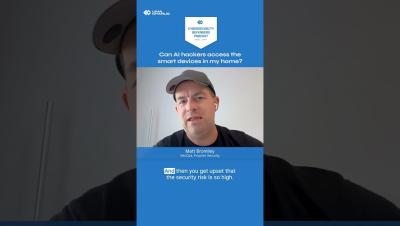
Can AI hackers access the smart devices in my home? #ai #cybersecurity

New research shows how attackers could hijack Google's Gemini AI through a simple calendar invite to control smart lights, shutters, and even boilers. The key insight from our latest podcast is that it's not about the AI vulnerability, it's about network segmentation. The real lesson? Don't give AI systems direct access to your physical devices. The simple fix is to segment your IoT devices on separate networks.

IBM 2025 Cost of a Data Breach Report: Lessons for API and AI Security

IBM’s 2025 Cost of a Data Breach Report offers one of the clearest and most comprehensive views yet of how AI adoption is shaping the security landscape. While breach numbers are relatively low – only 13% of organizations reported breaches involving AI models or applications – the report reveals a troubling pattern: APIs and integrations are often the real entry point, and they’re frequently under-secured. At Wallarm, we’ve been banging this drum for a while.

See Falcon Next-Gen Identity Security in Action

Traditional identity and access management (IAM) and privileged access management (PAM) solutions are unprepared to face modern identity attacks. These solutions are primarily built to manage access — not secure it. Falcon Next-Gen Identity Security combines proactive prevention, modern secure privileged access, identity threat detection and response (ITDR), SaaS identity security, and agentic identity protection to stop identity-driven attacks.

How Researchers Collect Indicators of Compromise

As security researchers, we actively monitor the latest CVEs and their publicly available exploits to create signatures. Beyond CVEs, we also hunt for malware on platforms such as MalwareBazaar, which enhances our visibility into attacks occurring across networks. Today, we'll demonstrate a simple workflow showing how researchers use various tools to collect indicators of compromise (IOCs) and develop appropriate signatures from detonated malware.