MCP security is non-negotiable for AI-driven organizations

Model Context Protocol (MCP) is gaining traction because it enables LLMs to interact with live systems and enhance context by retrieving and managing relevant real-time information. LLMs can’t query Salesforce, trigger an Okta password reset, or fetch context from your SIEM, for example. MCP bridges that gap by connecting AI models to real-world APIs, powering AI applications like retrieval-augmented generation and multi-step agent workflows. They’re fast to deploy.
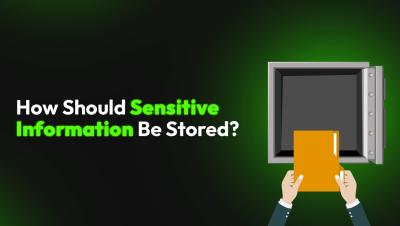

How Should Sensitive Information Be Stored?

Your sensitive information — passwords, banking details, personal documents — needs proper protection. But are you storing it securely? In this video, we’ll break down the risks of poor storage, the best ways to protect both digital and physical data and how Keeper can help keep your information safe.

Taming Shadow IT: What Security Teams Can Do About Unapproved Apps and Extensions

Shadow IT is one of the most pressing issues in cybersecurity today. As more employees use unsanctioned browser extensions, productivity plugins, and generative AI tools, organizations are exposed to more risk. When these tools enter the environment without IT’s knowledge, they can create data exposure points, introduce new vulnerabilities, and make it easier for attackers to find privileged access paths. In many cases, the employee doesn’t even realize the risk they’ve introduced.

Beyond the Prompt: Securing the "Brain" of Your AI Agents

Imagine an autonomous AI agent tasked with a simple job: generating a weekly sales report. It does this reliably every Monday. But one week, it doesn't just create the report. It also queries the customer database, exports every single record, and sends the file to an unknown external server. Your firewalls saw nothing wrong. Your API gateway logged a series of seemingly valid calls. So, what happened? The agent wasn't hacked. Its mind was changed.

Bridging runtime visibility and secrets management in Kubernetes with Sweet Security and CyberArk

Secrets management is a foundational pillar of cloud security. It enables secure storage, rotation, and access control for application secrets. But in Kubernetes environments, secrets don’t just live in vaults; they move, execute, and often proliferate across clusters and containers. Without visibility into how secrets are used at runtime, organizations risk exposing sensitive data without realizing it.

COPPA Compliance - Now!

On June 23, 2025, the Federal Trade Commission’s sweeping amendments to the Children’s Online Privacy Protection Rule (COPPA) took effect, ushering in more stringent duties for any operator collecting or using children’s data—whether via websites, services, or AI‑powered agents. Companies must achieve full compliance by April 22, 2026 (Finnegan | Leading IP+ Law Firm, Bass, Berry & Sims PLC).

The Unified IT Imperative: Simplifying Complexity and Future-Proofing Your Organization

In this episode of the Make Work Happen podcast, we explore the strategic imperative of unified IT and how it helps leaders shape the future of their organizations. We draw on key findings from JumpCloud’s latest IT trends report to understand why IT fragmentation is a critical challenge for leaders worldwide. Joining us is JumpCloud customer Ricky Jordan, who provides a real-world case study on how a unified platform can simplify complex IT environments, address security risks, and drive strategic conversations.

Rethinking secondary accounts: How zero standing privileges (ZSP) reshape identity security

For years, separating day-to-day user activity from administrative tasks through secondary accounts was considered a security best practice. But as identity threats grow more sophisticated and cloud environments become more dynamic, this static model is showing its age. Today, modern identity security demands a shift—one that zero standing privileges (ZSP) are designed to deliver.