Security | Threat Detection | Cyberattacks | DevSecOps | Compliance

SOC Tool Sprawl: What It's Really Costing Your Security Operations

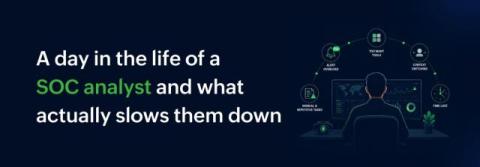
See how Torq harnesses AI in your SOC to detect, prioritize, and respond to threats faster. Request a Demo Security operations teams have never had more technology at their disposal… and they’ve never been more overwhelmed by it. The average SOC is now running 7 AI-powered solutions. 10% are managing 10 or more. And across the broader enterprise, organizations deploy an average of 83 security tools from 29 vendors, according to IBM research.

The CISO's Role Is Rapidly Changing

See how Torq harnesses AI in your SOC to detect, prioritize, and respond to threats faster. Request a Demo John White is the Field CISO for EMEA at Torq. A respected security executive with more than 20 years of leadership experience, John previously served as CISO at Virgin Atlantic, where he led a multi-year transformation deploying the Torq AI SOC Platform to modernize cyber operations.

The 2026 AI SOC Leadership Report: What 450 Security Leaders Told Us

See how Torq harnesses AI in your SOC to detect, prioritize, and respond to threats faster. Request a Demo When we started building Torq four years ago, we had a thesis: the SOC was broken, and automation — real automation, not another tool bolted onto the stack — was the way to fix it. AI has since changed the game entirely. But has it streamlined the SOC, or introduced new complexity? We wanted to find out.

10 Questions CIOs Should Ask to Modernize Security Operations

Chris Jacob, Field CISO, Securonix For years, security operations has been measured by effort. More alerts are reviewed. More logs are ingested. More tools are deployed. More dashboards are built. On paper, that can look like progress. In practice, many CIOs know better.

Fast Answers, New Problems with AI in the SOC

AI is moving into security operations fast, but the gap between a strong demo and something you can trust in production is still bigger than most teams want to admit. That gap is where risk starts. Eddie frames that early by pushing back on the idea that AI is about reducing headcount and arguing that the teams getting the most value are using it to amplify their best people instead.

The Future of Superintelligent Security Operations Starts with Data Built for AI

Every major shift in security operations starts with a shift in the underlying platform. The AI era is no different. As artificial intelligence moves from novelty to necessity, the real dividing line in cybersecurity will not be which vendor can add AI features the fastest. It will be which platforms are built on the right foundation to make AI useful in real operations and trustworthy when the stakes are high. That foundation is data, but not in the simplistic sense the market often uses the term.

From Intent to Outcome: How Agentic Coding is Transforming the SOC

See how Torq harnesses AI in your SOC to detect, prioritize, and respond to threats faster. Request a Demo Security teams are being asked to move faster and handle more complexity, while the threats they defend against are increasingly AI-assisted. When I wrote about VoidLink in January, my point was simple: you cannot fight machine-speed threats with human-speed defense. Attackers are using AI to code, adapt, and scale attacks while humans are still grinding away doing the heavy lifting in the SOC.