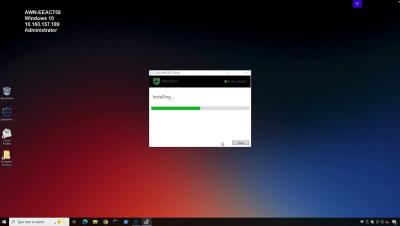
In this video, we'll demonstrate how easy it is to install the Aurora Protect agent on a Windows system, then validate the successful install in the Aurora Console.
Imagine security data and analytics like a carnival’s hall of mirrors. From convex mirrors that show you a shorter, squatter version of something to the concave mirrors that show a highly magnified image, you see the same object in multiple ways. Every view gives you a different insight and provides a unique vantage point. Online Analytical Processing (OLAP) systems are different mirrors that allow security teams to create focused analytics models for different insights about your security posture.
In today’s modern SOC, more data doesn’t always mean better outcomes. Security teams are overwhelmed by irrelevant telemetry, storage bills are out of control, and compliance regulations demand long-term retention—even for data with little threat value. Legacy SIEMs treat all logs the same, flooding analysts with noise and slowing down response times. The result? Bloated infrastructure, delayed investigations, and boardroom frustration over unproven ROI.
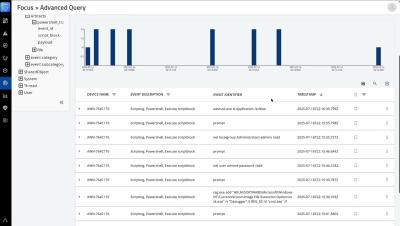
Deep investigation in cybersecurity isn’t just about watching dashboards and clicking “resolve” on tickets. It’s an intricate process of piecing together attacker behavior across time, systems, and attack vectors to understand not just what happened, but how and why.
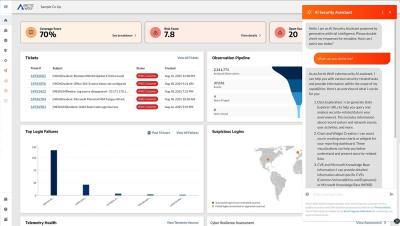
In this demo, we will look at three different use cases for the AI Security Assistant including general security knowledge, ticket context and data visualization.
MITRE ATT&CK has become the de facto SOC framework for classifying adversary behavior — and for good reason. It gives SOC teams a common language to describe threats, uncover gaps, and fine-tune detection logic. But let’s be honest: mapping real-world activity to ATT&CK tactics and techniques is still a time-consuming grind.
Konstantin (Kostya) Ostrovsky is the Chief Architect at Torq, where he leverages over 18 years of experience in software engineering and architecture. He specializes in cybersecurity, with a background that began with writing Windows Kernel Drivers. Konstantin is also a frequent speaker at software engineering conferences globally. Phishing attacks have evolved significantly in recent years, rendering traditional, rule-based defenses ineffective against sophisticated threats.
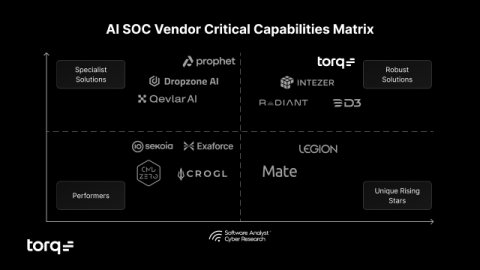
The SACR 2025 AI SOC Market Landscape Report just dropped, and Torq was named one of the “most feature-rich platforms” on the market. Not because we bolted a chatbot onto triage. But because we’ve built an AI SOC platform modern security teams actually need: an AI-native, execution-first infrastructure that operationalizes intelligence at scale. And that platform works.
The SANS 2025 SOC Survey is a reality check: despite years of investment in shiny new tools and all the talk of AI and automation, most security teams are stuck in firefighting mode, drowning in unstructured data, and burning out talent. The tools may be new, but under the hood, most SOCs still struggle with the same structural issues they were five years ago: reactive workflows, manual processes, and underwhelming AI adoption.