Security | Threat Detection | Cyberattacks | DevSecOps | Compliance

Beyond Agent-Washing: How Torq Delivers True Agentic Automation for Security

Eldad Livni is the Co-Founder and Chief Innovation Officer at Torq. Prior to founding Torq, Eldad co-founded and served as CPO of Luminate Security, a pioneer in Zero Trust/SASE. Following Luminate’s acquisition by Symantec, he went on to act as CPO of Symantec’s Zero Trust/Secure Access Cloud offering. The security industry has a new buzzword problem.
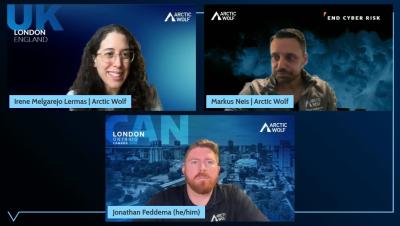
Zero Assumptions: A Data Science & Threat Intel Roundtable

How do data science and threat intelligence intersect to strengthen defenses in today’s evolving cyber landscape? Join us this Wednesday, September 24 at 10 AM ET for a special edition of Arctic Wolf SOCast: Zero Assumptions, where our experts will break down how advanced analytics and threat research work hand-in-hand to outpace attackers. Featuring.

4 Ways ThreatQ Automates Security to Simplify SecOps

For each of the past four years, ThreatQuotient a Securonix company has released one of the industry’s definitive research reports on security automation. During that time, we’ve tracked the evolution of automation adoption by thousands of cybersecurity professionals around the world, including key trends, challenges and strategies for automating security operations.

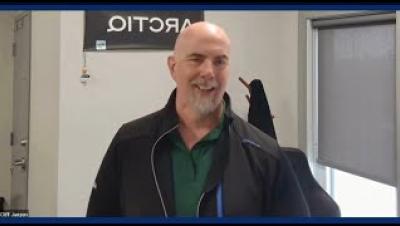
Security Potpourri: SOCs, automation, and penetration testing with Cliff Janzen

Cliff Janzen, CISO and VP of Security Services at Arctiq, joined us for Defender Fridays for a special "Security Potpourri" session! What's on the menu? > SOC operations and optimization> Security automation strategies> Penetration testing insights> The current state of security landscape> All through Cliff's expert lens and real-world experience.

5 Ways ThreatQ Automates Threat Intelligence to Simplify SecOps

At ThreatQuotient a Securonix company, we’ve cracked the code on how to use threat intelligence to simplify security operations. It involves using automation and AI to accelerate and improve threat intelligence management to help teams work smarter, not harder. Our ThreatQ Platform provides a data-driven way to streamline the threat intelligence lifecycle – a structured process for collecting, analyzing, distributing, and honing threat intelligence to improve defenses.

90 Days to SOC Autonomy: How Torq Customers Get There

Security operations shouldn’t be defined by burnout, backlog, and brittle tools. Torq HyperSOC replaces the slow, manual SOC model with an autonomous system powered by agentic AI, Hyperautomation, and seamless stack integration. In just 90 days with Torq, security teams move from reactive to proactive — automating Tier-1 triage, accelerating response, and freeing analysts to focus on what matters most.

Torq for MDRs: Increase Margin and Onboard Customers Faster

Managed detection and response (MDR) providers faceskyrocketing demand and rising stakes. The MDR market is projected to grow to $11.8 billion by 2029 (up from $4.1 billion in 2024), a 23.5% compound annual growth rate driven by the intensifying landscape of advanced threats and sophisticated attacks, as well as ongoing cybersecurity talent shortages.

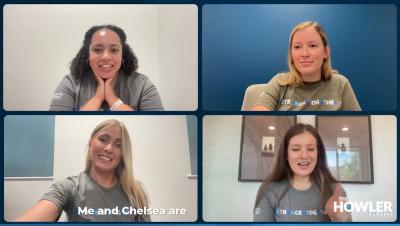
The Howler Episode 22: The Two Year Anniversary Special!

The Howler Podcast is two years old! In this special episode, Chelsea and Mary are joined by some surprise co-hosts as well as pack members from around the globe as they celebrate Arctic Wolf's one-of-a-kind culture. Interested in running with the pack? Explore careers at Arctic Wolf—one of the fastest-growing and exciting cybersecurity companies in the world, to learn about how you can join our Pack, create impact, and influence what’s next in security operations.

From CISO to SOC Managers: Why Leadership Continuity Matters in Cybersecurity

In today's digital-first world, cybersecurity is no longer just a technical concern - it's a business-critical priority. As threats evolve and become more sophisticated, organizations rely on skilled leaders to manage governance, strategy, and daily operations. While many companies invest heavily in tools and technology, fewer focus on ensuring continuity among their security leadership teams. From Chief Information Security Officers (CISOs) to Security Operations Center (SOC) managers, leadership continuity is an often-overlooked element that can make the difference between resilience and vulnerability.

Threat Intelligence Isn't Just for SOCs: How Marketing, Legal, and Risk Can Benefit Too

Within a Security Operations Centre (SOC), threat intelligence is indispensable. It provides the context analysts need to cut through noise, correlate indicators of compromise (IOCs), and prioritise alerts based on real-world risk. Without it, SOC teams would be overwhelmed, drowning in log data, chasing false positives, and reacting blindly to incidents rather than proactively mitigating them.

Using AI in Security Operations: A Practical Checklist for the Modern SOC

AI is transforming how security operations centers (SOCs) work, but the hype can outpace the reality. You don’t need to build custom models or deploy cutting-edge platforms to benefit. Chances are, you already have AI-powered capabilities in your SIEM, SOAR, or security data platforms. The question is: Are they doing anything useful? This practical playbook lays out six key priorities to increase productivity and effectiveness while maintaining control.

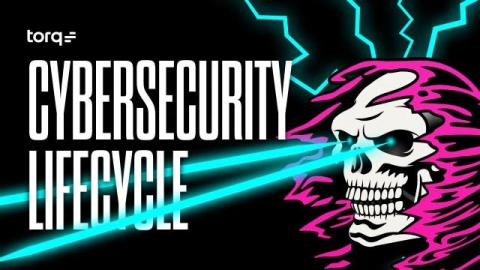
The Cybersecurity Lifecycle: How Torq Automates Detection, Response, and Recovery

The cybersecurity lifecycle is the foundation of how security teams protect, detect, and recover from threats. From asset discovery to post-incident recovery, the lifecycle defines the processes organizations rely on to safeguard data and systems. But here’s the challenge: While the lifecycle provides a roadmap, operationalizing it in modern SOCs is messy. Disconnected tools, alert fatigue, and endless manual tasks slow down response times and create gaps that attackers exploit.

How using Cloud SIEM dashboards and KPIs for daily standups improves SOC efficiency

When we talk about emerging technologies and digitization, we often forget that while innovators work to bring the best security tools to market, malicious actors are concurrently working to identify loopholes and vulnerabilities in these new systems. Gone are the days when cyber attacks were a rare occasion; now, they happen almost daily.

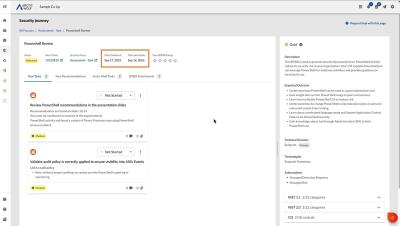
How Arctic Wolf Managed Risk Helps Your Organization Manage the Attack Surface

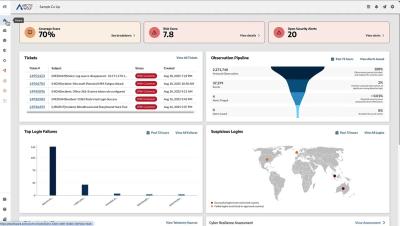
With Arctic Wolf Managed Risk, organizations can monitor their risk score, discover and assess risks in the environment, report on assets and prioritize remediation activities to the entire security environment. Learn how Arctic Wolf Managed Risk empowers you to discover, assess, and harden your environment against digital risks by contextualizing the attack surface coverage across your networks, endpoints, and cloud environments.

Where Online Analytical Processing (OLAP) Overlaps With Security Operations

Imagine security data and analytics like a carnival’s hall of mirrors. From convex mirrors that show you a shorter, squatter version of something to the concave mirrors that show a highly magnified image, you see the same object in multiple ways. Every view gives you a different insight and provides a unique vantage point. Online Analytical Processing (OLAP) systems are different mirrors that allow security teams to create focused analytics models for different insights about your security posture.

Breach Ready. Board Ready. Built for Efficiency.

In today’s modern SOC, more data doesn’t always mean better outcomes. Security teams are overwhelmed by irrelevant telemetry, storage bills are out of control, and compliance regulations demand long-term retention—even for data with little threat value. Legacy SIEMs treat all logs the same, flooding analysts with noise and slowing down response times. The result? Bloated infrastructure, delayed investigations, and boardroom frustration over unproven ROI.

What Deep Investigation Really Looks Like: A SOC Analyst's Perspective

Deep investigation in cybersecurity isn’t just about watching dashboards and clicking “resolve” on tickets. It’s an intricate process of piecing together attacker behavior across time, systems, and attack vectors to understand not just what happened, but how and why.

Join the SIEM Evolution: A SOC Leader's Guide to Streamlining SecOps

Security operations teams use SIEMs to defend against threats, but many SIEMs are struggling to keep up with the complex processes involved in threat detection, investigation, and response (TDIR) due to limitations in architecture and technology. Security teams have limited resources, personnel, and cybersecurity skills to stay ahead of the latest threats. So how will the next evolution of SIEM alleviate these pain points?