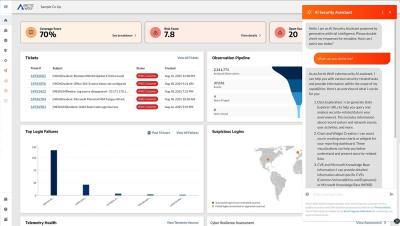
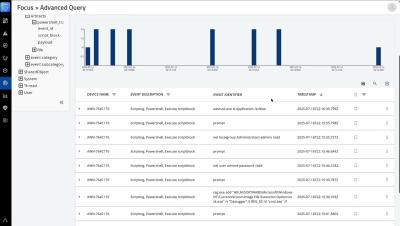
In this demo, we will look at three different use cases for the AI Security Assistant including general security knowledge, ticket context and data visualization.
MITRE ATT&CK has become the de facto SOC framework for classifying adversary behavior — and for good reason. It gives SOC teams a common language to describe threats, uncover gaps, and fine-tune detection logic. But let’s be honest: mapping real-world activity to ATT&CK tactics and techniques is still a time-consuming grind.
Konstantin (Kostya) Ostrovsky is the Chief Architect at Torq, where he leverages over 18 years of experience in software engineering and architecture. He specializes in cybersecurity, with a background that began with writing Windows Kernel Drivers. Konstantin is also a frequent speaker at software engineering conferences globally. Phishing attacks have evolved significantly in recent years, rendering traditional, rule-based defenses ineffective against sophisticated threats.
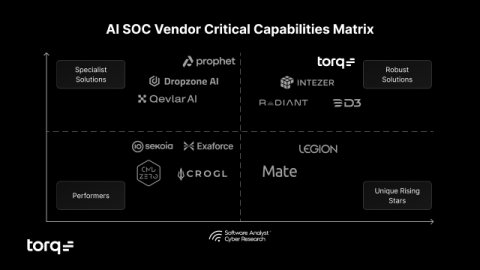
The SACR 2025 AI SOC Market Landscape Report just dropped, and Torq was named one of the “most feature-rich platforms” on the market. Not because we bolted a chatbot onto triage. But because we’ve built an AI SOC platform modern security teams actually need: an AI-native, execution-first infrastructure that operationalizes intelligence at scale. And that platform works.
The SANS 2025 SOC Survey is a reality check: despite years of investment in shiny new tools and all the talk of AI and automation, most security teams are stuck in firefighting mode, drowning in unstructured data, and burning out talent. The tools may be new, but under the hood, most SOCs still struggle with the same structural issues they were five years ago: reactive workflows, manual processes, and underwhelming AI adoption.
Patrick Orzechowski (also known as “PO”) is Torq’s Field CISO, bringing his years of experience and expertise as a SOC leader to our customers. PO is a seasoned security veteran with a deep understanding of the modern security landscape. You can find him talking to SOC leaders and CISOs from major brands at cybersecurity events around the world.
Forget drawn-out SOAR integrations, endless proof-of-concepts, and prolonged vendor lock-ins. Most cybersecurity teams have the tools — what’s missing is an integration platform and reliable guidance that can rapidly tie it all together and deliver tangible results. Torq is designed precisely for that: we blend AI-native capabilities, no-code Hyperautomation, and unparalleled success enablement to transform your security operations into a fully autonomous, modern SOC within just three months.
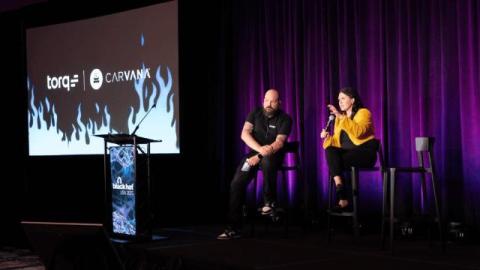
CISOs everywhere are feeling the AI fatigue. Every vendor at Black Hat 2025 was hyping ‘AI agents for SecOps,’ so there’s rightfully a lot of skepticism about deploying AI in production, especially in enterprise environments. But the old way of running a SOC just isn’t working anymore. After all the time and money spent on traditional playbooks, we’re still wrestling with the same challenges: alert fatigue, burnout, tool sprawl, and inability to scale.
This month we sit down with Chris Kraft, Chief Product Officer, as he shares his career journey and what brought him out of retirement, leadership lessons and his Insights Discovery results, and his love of board games along with recommendations!
AI-powered triage, faster insights, and the headspace your analysts need If you’re a security leader or analyst within the defence space, you likely brace yourself for a daily battle with alert overload — and you’re not alone. Analysts face a relentless flood of notifications with the majority turning out to be false positives. Studies show that 71% of SOC personnel1 experience burnout and report feeling overwhelmed by alert volume.
In many organisations, the security operations centre (SOC) is overwhelmed. The volume of alerts coming from tools like Sentinel, Defender for Endpoint, and Cloud Apps is high—and growing. Spending more time triaging noise than they are stopping real threats, does this sound familiar? This isn’t about analyst headcount or tool choice. It’s about architecture.