Security | Threat Detection | Cyberattacks | DevSecOps | Compliance

EU data sovereignty and security operations: how Sumo Logic solves both at once

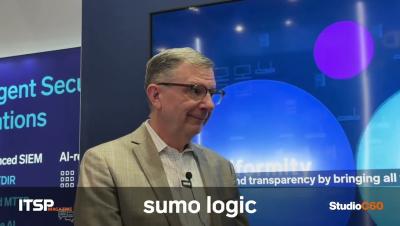
EU organizations in finance, healthcare, telco, and government face a real tension: keep the business running or satisfy an ever-growing stack of data regulations. Most end up choosing one over the other. Sumo Logic and AWS just changed that. At Infosecurity Europe 2026, Bill Peterson, Senior Director of Product Marketing at Sumo Logic, sat down with Sean Martin from ITSPmagazine to break down Sumo Logic's integration with the AWS European Sovereign Cloud — and what it means for security and operations teams operating in the EU. In this interview, Bill covers.

What Moves Stablecoins From Pilot to Production

Pilots are running. Proof-of-concepts are live. But when does stablecoin activity at banks actually become a production revenue line? Stephen Richardson, Chief Strategy Officer at Fireblocks, lays out the three specific signals he is watching: large regional and GSIB banks enabling stablecoin acceptance as a corporate treasury product, banks initiating stablecoin payouts directly from DDA accounts, and the emergence of bank-to-bank stablecoin networks with compliant messaging infrastructure for cross-border settlement.

Stablecoins Inside the Bank Stack: Treasury, Settlement & 24/7 Money

Stablecoins are moving from pilot projects into live bank infrastructure — but the path from proof-of-concept to production is anything but simple. Stephen Richardson, Chief Strategy Officer and Head of Banking at Fireblocks, joins John Lagman of Bloomberg at REDeFiNE Tomorrow 2026 to break down where banks actually stand with stablecoins: the infrastructure decisions they have to make, why most are still in early-stage evaluation, and what a scaled operating model looks like.

Do You Know How Many MCP Servers Are Running in Your Environment Right Now?

Most organizations have no idea how many MCP servers are running in their environment—and attackers are counting on that. In this clip, Adrian Culley breaks down the exact steps security teams need to take now: run the network scan, apply stringent code review to every MCP server project you find, and mandate authentication. Authorization may be optional in the MCP spec—but it doesn't have to be optional in your deployment.

AI-assisted SOC training with Carlo Anez

Join us for this week's Defender Fridays as Carlo Anez, Founder & Lead Instructor at IgniteCyber Academy and DEFCON Training Instructor, breaks down how to build practical blue team skills using open-source labs, MITRE ATTACK, and real-world defender workflows, and where AI fits into the picture without replacing the analyst.

SecurityScorecard Weekly Brief: The Driftnet Edition on the Health of the Internet - Brandon Torio

In this week's Weekly Brief: The Driftnet Edition, Brandon Torio explains why internet scanning is a lot like modern healthcare. Just as blood tests help doctors identify hidden health risks before they become serious problems, internet scanning helps organizations uncover unseen cyber risks across their attack surface and third-party ecosystem. "The internet has evolved past any one person's understanding.".

Respond to CrowdStrike & SentinelOne alerts across multiple customers

Manage security alerts from multiple EDR customers automatically. See how Tines ingests, enriches, and responds to CrowdStrike and SentinelOne detections in one workflow. If you're managing EDR platforms for multiple customers, keeping on top of alerts across separate tenants is a nightmare. This story pulls alerts from CrowdStrike and SentinelOne, normalizes the data, and automatically opens a Tines Case all without hardcoding a single credential.

EveryOps in 1 min: What is Software Vulnerability?

Is there an unlocked window in your code? A software vulnerability is more than just a "bug". It's a security gap that can lead to data breaches, system crashes, and lost customer trust. In this episode of EveryOps in 1 Minute, we break down: The definition of a software. Why they happen (from coding slips to complex architecture). Real-world examples like Log4j. How to "shift left" to catch flaws before they reach production.

How CISOs Track Configuration Drift in Real Time | Misconfiguration & Cybersecurity Posture

How do CISOs feel about drift? Misconfigurations rarely look like incidents. A setting shifts, posture weakens, and nothing announces it until it already matters. That is a hard seat for whoever owns posture. Without a clear view of what changed, you are working secondhand, leaning on the team to tell you what moved and whether it hurt.