Security | Threat Detection | Cyberattacks | DevSecOps | Compliance

Obrela's 2025 Digital Universe Report highlights shift to stealthy, identity-driven cyberattacks

London, 21st April - Obrela has released its Digital Universe Report 2025, revealing a significant shift in the global cyber threat landscape as attackers move away from high-volume attacks toward more targeted, stealth-driven techniques focused on identity, access and persistence.

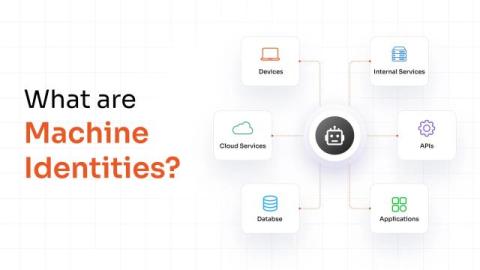
Managing the non-human identity lifecycle in modern environments

Non-human identities (NHIs) such as service accounts, API keys, tokens, and workload identities now outnumber human users by 10x or more in most organizations. Unlike human identities that follow HR-driven lifecycles, NHIs are often created ad hoc, granted excessive permissions, and rarely decommissioned. Effective NHI lifecycle management spans five stages: discovery and inventory, secure provisioning, ongoing monitoring, credential risk management (including rotation), and decommissioning.

Cyber Essentials v3.3: How MSPs can address their biggest concerns

While it is not technically required, the Cyber Essentials 3.3 set of standards is quickly becoming a necessity for organizations that need to ensure public sector contract, insurance and supplier assurance in the U.K. That’s good news for managed service providers (MSPs), who now have an opportunity to build both trust and revenue by guiding clients toward Cyber Essentials certification. Acronis recently surveyed U.K. partners about Cyber Essentials.

Agent-First Observability: Dynamic Data, High Cardinality, and the Business Impact

We want to transform how companies make decisions. That is not what you expect to hear from an observability company. Observability tools are supposed to help you monitor systems, debug incidents, and maybe reduce downtime. Useful, but not exactly the foundation for business decision making. So what does observability have to do with revenue, churn, or customer experience? More than you think, because observability already sits on top of the most important data in your business.

Reverse Proxy: How It Works & Example Architecture

Accessing modern infrastructure requires more than a network-level foothold. As services spread across clouds, clusters, and regions, the question of who can reach what stops being a network question and becomes an identity question. Reverse proxies are the component that answers it. A reverse proxy sits between clients and backend services, validating identity and enforcing authorization on every inbound request before any application is touched.

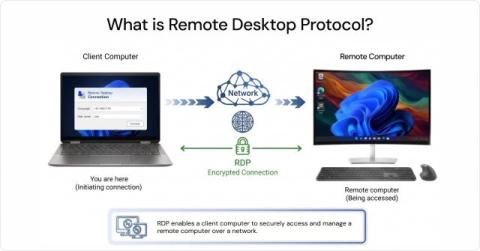
How to Detect & Prevent Remote Code Execution (RCE)

Remote Code Execution (RCE) is one of the dangerous vulnerabilities when it comes to cyberattacks and safeguarding against them is critical. In real-world environments, attackers keep looking for unpatched software and misconfigurations to gain an opportunity for remote code execution. Once code execution is achieved, a simple technical glitch becomes an active intrusion. Proactive detection is a crucial part of any RCE defense strategy.

VibeScamming: Why AI-built scams are changing phishing risk

VibeScamming refers to AI-assisted phishing operations where attackers use natural-language tools to rapidly generate and modify phishing content and web pages, lowering (but not eliminating) the technical skill required. One of the primary enterprise impacts is faster phishing iteration and reconstitution after blocks or takedowns, with identity compromise remaining a major risk alongside malware and other payload-based attacks.

The 7 Rs of AWS Application Migration: Choosing the Right Path for Each Workload

Most application migration projects fail the same way: someone picks a single strategy for the entire portfolio, then tries to force every workload into it. Lift-and-shift everything to meet a data centre exit deadline. Refactor everything because someone read a cloud-native manifesto. Retire nothing because no one wants to make the decision. AWS’s 7 Rs framework exists to prevent that.

The April 2026 AI Security Report: 6 Incidents and Detailed Attack Paths

From AI agents leaking internal data to coordinated global malware campaigns — here is everything that happened in AI cybersecurity between April 7 and April 21, 2026, with detailed attack paths for each incident. The fifteen days following April 7, 2026 produced six distinct AI-related security incidents spanning internal data exposure, supply chain exploitation, autonomous malware generation, coordinated multi-vector attacks, model leak fallout, and documented AI agent control failures.