Security | Threat Detection | Cyberattacks | DevSecOps | Compliance

Best AI Development Companies for Business Process Automation in 2027: 7 Companies Compared, Founded Between 1989 and 2016

We compared seven companies that build AI into business processes such as documents, customer support and operations: Azumo, Hicron Software, Simform, Master of Code Global, ScienceSoft, Netguru and SumatoSoft. They were founded between 1989 and 2016, and their sites describe everything from AI agents to document processing. The companies appear in no particular order, since each one fits a different kind of project, and every detail below comes from the company's own website.

How AI Is Changing Portfolio Analysis and Financial Decision-Making

Want to make smarter money decisions without spending hours buried in spreadsheets? Wealth management has always been about number crunching. For decades, that crunching was done by humans armed with calculators, whiteboards and caffeine. Fast forward to today, AI can help you.
Sponsored Post

Windows Hardening & Continuous Compliance: Keeping 200+ Security Settings Secure 24/7

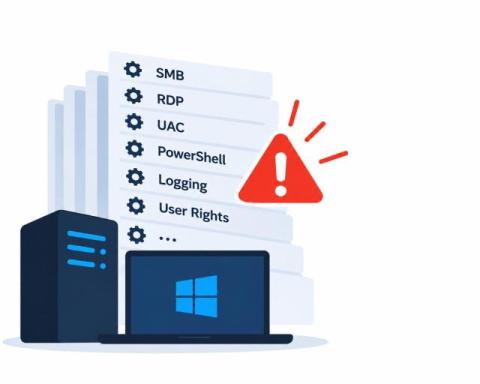
Every Operating System – not even counting the software installed on top of it – has a myriad of configuration settings that affect security. Windows Server alone has 4000+ configurable options, out of which 200+ are important for security & compliance efforts. They include: These settings are at the very core of all of your security & compliance efforts – and they are surprisingly often ignored.

RevStealer Malware: A Hidden Data Heist Behind the Promise of Free AI

RevStealer is an infostealer first observed in September 2026 that targets Windows systems, with reported 64-bit execution and JavaScript-based components. It is built to steal authentication credentials and other sensitive user data while emphasizing stealth through anti-debugging, anti-sandbox, anti-VM, and evasion features. Its threat significance comes from a short, theft-focused execution model that pairs broad data collection with concealed command-and-control and exfiltration behavior.

Your CVE is reachable. But is it exploitable?

Any SCA tool worth its salt has reachability analysis these days. When a dependency has a known vulnerability, these tools can tell you whether your code calls the affected function. This is pretty much non-negotiable because it helps teams focus their security efforts instead of sifting through noise. Every other step in prioritizing dependency CVEs builds on it. But just because the vulnerable function is reachable doesn’t mean it’s exploitable.

MCP Database Security: Seven Boundaries Every AI Agent Needs

Connecting an AI agent to a production database can turn a slow investigation into a short conversation. The agent can inspect a schema, generate a query, and help explain a failed migration or an unexpected metric. The same connection can also expose sensitive records or modify production data if the access path is treated as a single trusted pipe.

AI guardrails aren't security controls

AI guardrails are sold as a solution to keep models behaving as intended - but it can be hard to figure out what you’re getting. The problem starts with the word itself. "Guardrails" means different things depending on who's selling them. Some vendors use it for simple prompt filtering, others bundle in entirely different controls and call it "guardrails" because the word sounds reassuring. Without a shared definition, buyers can't easily tell what they're actually getting.

Phishing Is Now A Criminal Impersonation Industry. Here Is How To Fight Back

For years, we described phishing as an email problem: an attacker writes a convincing message, sends it to thousands of people and waits for someone to click. That model is now outdated. Microsoft’s disruption of YAM Store, CoGUI and Iron Man exposed something much larger: a cloud-based impersonation industry.

Why Human-led Pentesting Still Matters in the AI Era & Should Be in Your Strategy

AI tools can scan an entire application in minutes. They flag known vulnerabilities, map attack surfaces, and generate reports that look thorough. So, it’s fair to ask whether human penetration testers are still necessary. They are.