Security | Threat Detection | Cyberattacks | DevSecOps | Compliance

EMEA compliance just made sovereign cloud mandatory

For years, sovereign cloud was basically a data center pin on a map. A vendor would point at Frankfurt or Paris and call it a day. That pitch doesn’t work anymore, and it stopped working fast. Between late 2024 and late 2025, the EU passed three separate rules that turned sovereignty from a talking point into something organizations now have to prove, on a schedule, with documentation, to a specific regulator.

How identity sprawl is quietly expanding your attack surface

No city is designed to become complex. It starts with a simple plan with a handful of streets and a few neighborhoods. Then it grows. New districts appear, roads extend, bridges get built and temporary solutions slowly become permanent. As cities grow, complexity compounds, perhaps because that growth was never planned for. Identity environments follow the same pattern.

Why wild code is the next big challenge for CIOs

Tines co-founder and COO Thomas Kinsella recently joined Peter High on the Technovation podcast to talk about the evolution of Tines, the rise of "wild code," and why agents aren’t always the right tools for the job. The conversation covered a lot of ground — from the original problem that inspired Tines, to how teams should think about combining AI agents, deterministic automation, and humans in a single workflow. Here, we’ll share some of the highlights.

MFA for Retail: Smarter Authentication for Stores, E-commerce & Employees

A refund is an authentication event, so are a POS login, a loyalty-account change, and a technician connecting to a store remotely. Retailers have traditionally treated these moments as separate access problems, but they share the same underlying question: how much confidence should the business require before allowing an action to proceed?

How to Audit Data Access for HIPAA, PCI, and GDPR

When an auditor asks who can access protected health information, cardholder data, or EU personal data, and why, most security teams cannot answer with confidence right away. Access sprawls across cloud storage, SaaS applications, shared drives, and generative AI tools faster than manual reviews can track it. Permissions get granted for a single project and never revoked. A spreadsheet gets shared broadly and forgotten.

CVE-2026-76461: Active Exploitation of Cisco Secure Email Gateway Critical Zero-Day Vulnerability Immediate Mitigation Required

CVE-2026-76461 is a pre-authentication SQL injection vulnerability in the email parsing logic of Cisco Secure Email Gateway (AsyncOS). This vulnerability enables unauthenticated remote threat actors to execute arbitrary code as root by sending crafted, malicious emails. This grants threat actors full control over the operating system, allowing data exfiltration, email surveillance, persistent access, and potential network pivoting, all without user interaction or credentials.

PhantomRaven: An LLM-Generated Information Stealer Developed for Bug Bounty Hunting

CrowdStrike Counter Adversary Operations identified a financially motivated threat actor who works as a bug bounty hunter and who developed and distributed the JavaScript (JS)-based information stealer PhantomRaven via npm, a platform on which developers can access open-source packages to build applications and software.

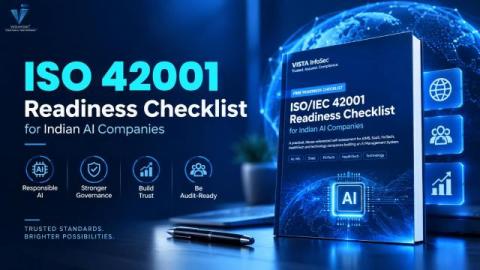
ISO 42001 Readiness Checklist: 15 Questions to Ask Before Certification

Getting an AI policy approved is not the same as being ready for ISO/IEC 42001 certification. Your organization may already have risk registers, information security controls, model documentation, supplier assessments and responsible AI principles. The more important question is whether these elements operate together as an Artificial Intelligence Management System (AIMS) — and whether you can demonstrate that with evidence. Before asking: “How quickly can we get ISO 42001 certified?”

AI Agents Are Forcing Us to Rethink Identity

Since joining BlueVoyant in May, I’ve spent my first 100 days listening. I've had conversations with nearly 50 customers and partners across industries and geographies, as well as the broader security industry, engaging with leaders at Black Hat last month. What I heard reinforced something I believe strongly: the security challenges organizations face today are changing faster than the traditional enterprise security model was designed to handle.