Security | Threat Detection | Cyberattacks | DevSecOps | Compliance

The Ultimate Guide to Endpoint Security Management in 2026

Endpoint security management ensures visibility, control, and protection across diverse devices in hybrid environments. It integrates policy-driven automation, patching, and conditional access to reduce risk and enforce compliance. Unified Endpoint Management and Zero Trust frameworks enable scalable, centralized defense against evolving threats and operational disruptions.

Healthcare IoT Security Breach 2025: Why Over 1 Million Devices Were Exposed

A recent healthcare IoT security breach exposed thousands of devices across multiple facilities, including connected medical devices and critical healthcare equipment used in hospitals. Sensitive patient information was compromised, putting not only privacy at risk but also threatening health insurance portability and compliance with the accountability act.

What is an AI Bill of Materials (AI BOM)?

What’s happening under the hood of your AI systems? AI is now a crucial element of modern software applications, and if you don’t have visibility into its components, you’ll be left blind. Similar to a Software Bill of Materials (SBOM), an AI Bill of Materials, AI BOM, or AIBOM has become a crucial framework for documenting and securing this new and complex supply chain. This article is part of a series of articles on Shadow AI.

The Human Firewall: Building a Culture of Fraud Resilience

Cybersecurity tools are only as strong as the humans who use them. Training, culture, and awareness shape how individuals interact with those systems and whether they succeed. This is especially true when it comes to fraud prevention. While firewalls and encryption protocols can block many external threats, they can’t stop an employee from clicking on a fraudulent invoice, wiring money to a spoofed account, or falling for a phishing scam.

XWORM Returns to Haunt Systems with Ghost Crypt

Starting in July 2025, Kroll has observed a new delivery method coming from the XWORM malware family. Previously known to leverage a self-contained executable in order to drop the final payload, XWORM now uses Ghost Crypt which is a service publicized on HackForums and used to exploit DLL side-loading vulnerabilities in known applications. The service includes support for a range of malware families, including LUMMASTEALER, BLUELOADER, RHADAMANTHYS, XWORM, DCRAT, PURELOADER, STEALC and others.

How to Hide Shopify Store From Public Users & Limit Access to Employees

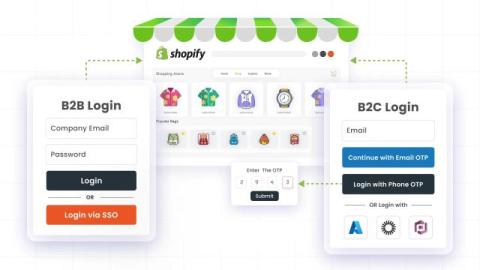
Ensure only verified members of your organization can log in to your Shopify swag store using their existing credentials. Discover how Single Sign-On (SSO) and automated user sync can help you create a secure, personalized experience for internal teams.

Detecting Lateral Movement with Behavioral Analysis: A Fidelis Deep Dive

Lateral movement is no longer a secondary concern—it’s a core phase of modern cyberattacks. Once attackers breach an initial endpoint, they don’t strike immediately. Instead, they pivot silently across the network, escalate privileges, and hunt for sensitive assets. The longer they dwell, the more damage they’re capable of. That’s why detecting lateral movement with behavioral analysis is essential for modern cybersecurity defense.

How Behavioral Analysis Drives Fast Reactions in Today's SOCs

The field of cybersecurity changes , and Security Operations Centers (SOCs) need to leave behind old signature-focused tools. SOCs now rely on behavioral threat detection and analysis to strengthen their systems. Using behavior-based methods to respond to threats is key to catching advanced attacks that slip past traditional defenses.

How Protecto Helps Healthcare AI Agents Avoid HIPAA Violations

Despite being one of the most highly regulated industries, healthcare businesses are disproportionately impacted by breaches. IBM’s independent research centre, Ponemon Institute’s report on the cost of a data breach, healthcare continues to top the list for 12 consecutive years. AI agents are infiltrating every sector, healthcare is no exception.

The ABCs of "ishing": From Phishing to Quishing

It’s no secret that in cybersecurity, many attacks begin with some form of “‑ishing.” But what exactly are these tactics and who’s behind them? From classic phishing emails to more advanced impersonation schemes using AI and social platforms, attackers continue to evolve their methods to exploit human behavior. Understanding the full spectrum of “‑ishing” techniques is critical for organizations looking to protect their people, data, and reputation.