Security | Threat Detection | Cyberattacks | DevSecOps | Compliance

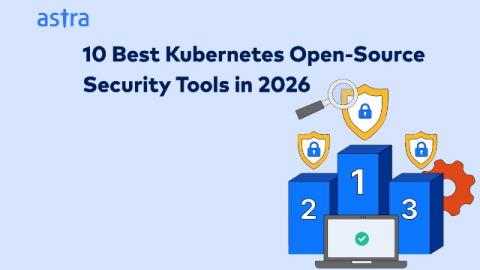
Kubernetes Backup: How It Works, What to Protect, and How to Choose a Solution in 2026

Kubernetes backup sounds straightforward until you look closely at what a real application includes. A production workload usually spans Kubernetes resources, cluster configuration, persistent volumes, secrets, service accounts, network policies, and external dependencies such as cloud databases or object storage. Protecting one of those layers helps. Protecting all of them in a coordinated way is what makes recovery practical.

How Keeper Helps Reduce Insider Threats in Healthcare

Insider threats in healthcare often originate from trusted employees, third-party vendors or contractors who have standing access to critical systems. When privileged access is not closely monitored, healthcare organizations face significant consequences, including compromised patient safety, exposure of Protected Health Information (PHI), disruption to clinical operations and Health Insurance Portability and Accountability Act (HIPAA) compliance violations.

Falcon Next-Gen SIEM Simplifies Onboarding with Sensor-Native Log Collection

As organizations expand their SIEM footprint, data onboarding often becomes a bottleneck. Deploying log collectors at scale typically requires coordination across multiple teams, external software distribution systems, packaging workflows, and change-control approvals. All of this impedes visibility when speed is critical. Adversaries are breaking out to move laterally across environments in as little as 27 seconds, according to the CrowdStrike 2026 Global Threat Report.

AI Access Without Add-Ons or Limits

Artificial intelligence (AI) within security operations has shifted from basic summarization to fully agentic systems that participate in threat detection, investigation, and response (TDIR). As these capabilities evolve, many vendors restrict access through add-ons, credits, or gated previews. The result is predictable: Analysts use AI less, trust it less, and see less value from it. Agentic AI capabilities should be available the moment analysts need it, not controlled through tiers or metering.

What is Data Masking

AI adoption is growing fast. But so are data risks. From Samsung’s internal code leak via ChatGPT to chatbot failures at global brands, recent incidents show one thing clearly: sensitive data can escape in unexpected ways. Most breaches today are not traditional hacks. They happen through AI tools, prompts, and automation workflows. This is why understanding what data masking is is critical. It helps organizations protect sensitive information without slowing innovation or breaking AI accuracy.

Entropy vs. Polymorphic Tokenization: Which One Actually Protects Your AI Pipeline?

If you’re building AI applications that touch sensitive data, tokenization isn’t optional. It’s the layer that decides whether your pipeline leaks PHI, PII, or financial data to your LLM, or keeps it protected. But here’s where most teams stop thinking: not all tokenization is the same. Two approaches you’ll encounter most often are entropy-based tokenization and polymorphic tokenization. They sound similar. They serve completely different purposes.

Bridging IT and OT identity decisions on the factory floor

In today’s smart factories, production doesn’t go quiet at shift change. Behind the scenes, modern manufacturing systems never cease. They continuously exchange data, adjust software and processes in real time, and allow vendors to connect remotely to monitor performance or deliver updates. As these interactions multiply, the number of identity-driven points grows just as quickly.

CVE-2026-29000: Authentication Bypass in pac4j-jwt Java Library

On March 03, 2026, pac4j released fixes for a maximum severity vulnerability in pac4j-jwt, tracked as CVE-2026-29000. The flaw arises from improper verification of cryptographic signatures in the JwtAuthenticator component when processing encrypted JWTs (JWE). A remote, unauthenticated threat actor who knows the server’s RSA public key can bypass authentication and impersonate arbitrary users (including administrators) by submitting a crafted JWE whose inner token is an unsigned PlainJWT.

CVE-2026-20079 & CVE-2026-20131: Maximum-severity Vulnerabilities in Cisco FMC

On March 4, 2026, Cisco released fixes for two maximum-severity vulnerabilities impacting Cisco Secure Firewall Management Center (FMC), which is used to centrally manage Cisco Secure Firewall devices. Arctic Wolf has not observed threat actors exploiting these vulnerabilities, nor have any public proof-of-concept exploits been reported.

MDR vs. MXDR: Navigating the Landscape of Managed Threat Detection and Response Solutions

As cyber threats continue to escalate in volume and sophistication, organizations increasingly rely on managed security services to detect, monitor, and respond to attacks. Two leading solutions in this space— Managed Detection and Response (MDR) and Managed Extended Detection and Response (MXDR) address these challenges in different ways.