Security | Threat Detection | Cyberattacks | DevSecOps | Compliance

SACR's New ECP Framework: What It Means for AI and Data Security

A new report from Software Analyst Cyber Research (SACR), The CISO Guide to Endpoint Control and Prevention (ECP): The Next Architecture for Endpoint Security, outlines a new era of endpoint security shaped by AI agents, copilots, SaaS applications, browser-based workflows, and increasingly autonomous activity. The report introduces Endpoint Control and Prevention (ECP) as a framework for understanding this shift and the new security capabilities it requires.

One Domain, Two Tenants, Only One Governed

An organization licenses ChatGPT Enterprise. An employee opens a second browser profile, signs into the personal account already logged in there, and pastes a customer extract into it. Same laptop, same managed browser, same corporate egress, same person, same web address. ‍ Every control in the path reads that session as ordinary and correct, because by every attribute any of them can see, it is.

Quantifying Cyber Risk With No Incident History

A company too young or too small to have an incident history still has to answer the underwriter at renewal, the enterprise customer running a security review, and the board asking what the exposure is. The usual objection is that quantification needs a baseline and there is none. ‍ The objection rests on a mistaken assumption about how these models work.

5 Tips for Scaling Cloud Security Without Adding Complexity

For years, managed service providers (MSPs) have secured customer cloud environments through periodic reviews of each tenant. That approach worked when a customer ran two or three cloud applications. As organizations adopt more SaaS applications, the number of environments, identities, and configurations to monitor also increases. The challenge is already visible.

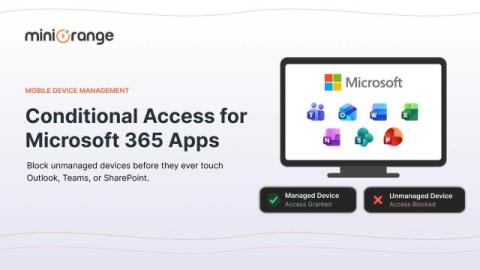
How Conditional Access Protects Microsoft 365 Apps From Unmanaged Devices

Your sales representative logged into Outlook from a coffee shop laptop that isn't enrolled, isn't encrypted, and hasn't seen a security patch in eight months. Should Microsoft 365 let that sign-in through just because the password was correct? That single question is why conditional access exists. Passwords tell you who someone claims to be. They say nothing about whether the device behind that login is safe to trust with your company's email, SharePoint files, or Teams chats.

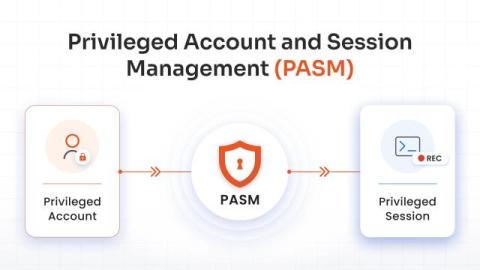
Privileged Account and Session Management (PASM) Explained

Privileged accounts have elevated access that can be used to rewrite system configurations, alter sensitive databases, create new admin users, and exfiltrate confidential customer data. This makes them attractive targets for attackers and risky when poorly managed. Basic passwords and network firewalls aren’t enough to protect them. You need to monitor them continuously. This is where Privileged Account and Session Management (PASM) becomes essential.

Securing Public Sector Software in 2026: Security Debt Demands Action

Public sector software, from defense platforms to K-12 student information systems, is accumulating a dangerous backlog of unresolved vulnerabilities. That’s the headline finding from Veracode’s 2026 State of Software Security report, and the data behind it is unambiguous: the pace of vulnerability discovery has structurally outrun the capacity to fix them.

Tines achieves TX-RAMP Level 2 certification

Government teams are under growing pressure to modernize and improve efficiency while continuing to meet rigorous requirements for security, governance, and accountability. Meeting both demands requires technology that can support innovation without sacrificing control. That’s why we’re proud to share that Tines has achieved TX-RAMP Level 2 certification for both Tines Stories and Tines 3B.

How the SOC Analyst Agent cuts investigation time from four hours to fourteen minutes

MFA fatigue campaigns work on a simple bet: eventually, someone taps “approve” just to make the notifications stop. It paid off. The attacker was in. The first move was quiet — deactivate SMS authentication, a small settings change easy to miss on a busy queue, and exactly the kind of thing that buys room to work without tripping an alarm. Then came the real work: AWS credentials pulled from one system, SSH keys from another, and a slow and methodical pull of internal source code.

From Phishing to Persistence: Lessons from the CrySome RAT Infection Chain

Originally published on Cybersecurity Insiders. Phishing remains one of the most reliable entry points for attackers, serving as the initial intrusion vector in 58% of incidents analyzed in LevelBlue’s Q1 2026 TTP Briefing. But today’s campaigns are becoming increasingly targeted and technically sophisticated, evolving from simply convincing a user to click to establishing long-term access to enterprise environments.