Security | Threat Detection | Cyberattacks | DevSecOps | Compliance

Disrupting Glassworm: Inside CrowdStrike's Takedown of a Developer-Targeting Botnet

On May 26, 2026, at 14:00 UTC, the CrowdStrike Counter Adversary Operations team executed a coordinated takedown of the Glassworm botnet, a global threat targeting software developers through the open-source supply chain. In collaboration with Google and the Shadowserver Foundation, we struck all four of Glassworm's command-and-control (C2) channels simultaneously, severing the operators from their infected machines and their ability to deliver new malicious payloads.

How Unsafe Infrastructure Can Lead to Injury Lawsuits

Every cracked sidewalk has a story. Every collapsed railing, every ceiling that gives way, each one represents a chain of failures that too often ends with someone seriously hurt. Across Canada, thousands of people suffer preventable injuries each year in the very spaces they trust most: roads, parks, office buildings, public stairwells. Unsafe infrastructure isn't a bureaucratic talking point. It's a genuine public health crisis that affects ordinary people on ordinary days.

Invisible Cross-Tracking: How Mobile Apps Share Your Data and How to Stop It

Tracking user activity across apps on mobile devices is crucial, as data no longer flows from a single source on phones. For example, in the span of an hour, a user might open Instagram, Gmail, a shopping app, a weather app, and a free game, while various advertising tools quietly analyze network signals, device behavior, location data, and app usage patterns. A VPN won't remove every unique identifier in these apps, but it does make it harder to connect one link in this tracking chain: the digital network footprint.

How an AI SEO Agency Helps SaaS Businesses Rank Faster Online

Software companies often depend on search visibility long before paid acquisition becomes efficient. Yet many teams publish pages without a clear intent map, a crawl plan, or realistic ranking priorities. Results slow down for predictable reasons. Search growth usually improves when technical repair, keyword research, and content planning move in the right order. With that structure in place, SaaS brands can reach evaluators earlier, support longer buying cycles, and build a steadier pipeline from organic discovery.

How to Prepare Your Organization for Rigorous Federal Security Standards

Navigating the cybersecurity landscape for defense contractors has become far more complex than it was in the past. Requirements are evolving quickly as global threats grow more advanced and targeted. Companies that work with the government can no longer afford to overlook these standards if they want to maintain eligibility for contracts.

The One Cybersecurity Policy Every Small Business Needs (And Most Don't Have)

Most small business owners have thought about cybersecurity at some point. Maybe after reading a headline about a ransomware attack. Maybe after a coworker clicked a sketchy email. Maybe after their IT company mentioned it in passing. But thinking about cybersecurity and actually having a policy in place are two very different things. Businesses that invest in proper cybersecurity services are far less likely to suffer a costly breach, yet most small businesses are still operating without one critical layer of protection: a formal Acceptable Use Policy.

Stop Treating AI Like Another SaaS App

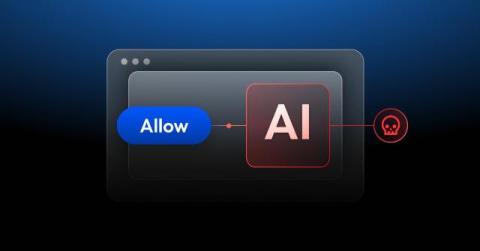
Employees are leveraging AI to boost productivity and adopt skills that would take years to learn. This ranges from drafting content, writing code, and building automated workflows. Some of this use is approved. Much of it is not. For many security teams, the first instinct is to treat this risk like they would any other SaaS risk: discover the app, allow or block access, apply DLP rules, and report on usage. That model works for traditional SaaS, but AI is different.

Why 'Secure' Mobile Apps Still Get Hacked | Post-Deployment Security

Your app passed testing. CI/CD ran clean. The App Store approved it. Your security team signed off. Six weeks later, attackers are reverse-engineering the binary on rooted devices, injecting JavaScript into your runtime, and probing API endpoints your scanner never modeled. Nothing in the code changed. The threat environment did. This is the central problem of modern mobile application security, and it doesn't get fixed by adding more pre-release scanners.