Security | Threat Detection | Cyberattacks | DevSecOps | Compliance

Ways We Can Keep AI Under Control Before It Becomes a Problem

It's no secret that AI has a significant presence in our daily lives these days. Many people hail it as a great way to save time and help them with basic tasks each day. The problem is, AI has become a part of nearly every single app, product, and device. AI has overreached the limits that the companies selling it promised. It's time for everyone to take action to ensure that AI products and companies are kept under control before they become problematic.


CCTV in Medical Practices and Clinics: A Practical Privacy Guide for Front Desk and Administrative Staff

Security cameras in a medical office are often installed for sensible reasons: preventing theft, documenting disruptive incidents, supporting staff safety, and helping administrators understand what happened when a patient, visitor, or employee reports a concern. The challenge is that a clinic is not a typical retail lobby. A camera can capture a patient checking in, a parent discussing a child's appointment, a person entering a specialty practice, or a workstation where appointment details may be visible.

Top 7 Recommended Digital Risk Protection Platforms in 2026

The best digital risk protection platforms in 2026 are CloudSEK XVigil, ZeroFox, Recorded Future, Flashpoint, Check Point External Risk Management, Group-IB, and ReliaQuest GreyMatter DRP. They separate less on what they detect, since every vendor scrapes the same forums, than on whether they validate a finding, remove it, and connect it to an attack path. No two are strong at the same jobs.

Who Really Controls the AI? Why Infrastructure Sovereignty Matters

The smartest AI model in the room may still be running on someone else's computer. Teams focus on model quality and speed. They compare GPU availability and price. Control of the underlying infrastructure often receives less attention. That gap matters as AI moves into sensitive business systems. Models may process customer records. They may use intellectual property or regulated data. Some connect directly to production operations.

7 AI Detection and Response Platforms for Enterprise Security Teams

The most difficult AI incidents do not necessarily begin with an obviously malicious prompt. An employee can ask an approved agent to summarize customer data. The agent retrieves the correct records, invokes an approved tool, generates the requested output, and then sends it somewhere it should never have gone. Every individual action may look legitimate in isolation. The incident only becomes visible when security can reconstruct the entire sequence and understand what the user intended, what the agent inferred, which systems it touched, and where the execution path diverged.

Why security questionnaires can't measure vendor risk

“Friends don’t send friends security questionnaires. “If you hang around me long enough, you will hear me say it. It gets a laugh, but the point underneath it is serious. Are security questionnaires enough to manage third-party risk? No. A questionnaire tells you what a vendor is willing to claim on a given day. It does not tell you whether the control behind that claim is working. Those are two very different things, and most third-party risk programs are still built on the first one.

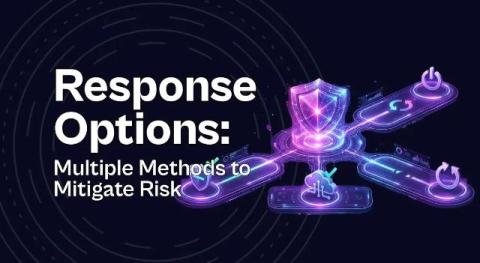
Response Options: Multiple Methods to Mitigate Risk

Seemplicity’s new Response Options feature gives teams multiple ways to respond to a confirmed finding, not just a single full-fix recommendation. AI Analysts surface and rank fix, neutralization, and mitigation paths based on security impact, deployment risk, and effort, helping teams reduce exposure faster while making safer, more informed remediation decisions. Every exposure management program eventually hits the same wall.

How to Detect Shadow AI: 8 Key Steps

Security teams have spent years building visibility into unsanctioned SaaS apps, cloud services, and other forms of shadow IT. But shadow AI raises the bar. Discovering an unsanctioned AI app or autonomous agent is only the beginning. Teams also need to determine which identities it authenticates with, what credentials and permissions it relies on, what data it can access, which systems it integrates with, and what downstream actions it performs. The scale of the challenge is already becoming apparent.

CVE-2026-49481: Vulnerability in UpSnap

On 26/05/2026, a security researcher at Astra Security found a critical Remote Code Execution (RCE) vulnerability in UpSnap, a web-based wake-on-LAN(WoL). The root cause is an OS Command Injection vulnerability(CWE-78) that exists in UpSnap’s device management functionality due to unsafe template interpolation of the IP and MAC fields.