Azure Government is a dedicated cloud for public sector organizations that want to leverage Azure’s suite of services in their highly regulated environments. As these organizations migrate their applications to Azure Government, they need to ensure that they can maintain visibility into the status and health of their entire infrastructure.
There’s never a dull moment at Snyk and for our Channel team that it’s been especially rewarding. We’re very excited to say that this week Snyk Infrastructure as Code (Snyk IaC) was named the winner of the cloud security category for the 2021 CRN Tech Innovator award. The full list of winners, unveiled earlier this week, showcases innovative vendors in the IT channel across 47 different technology categories, in key areas ranging from cloud to storage to networking to security.
Managing application resources at scale can be tricky business. As such, many DevOps and AppSec teams turn to using a declarative framework rather than writing individual scripts to deploy, manage, and maintain access controls for their resources. For Azure environments, Azure Resource Manager (ARM) is this management layer that allows teams to manage their infrastructure as code (IaC) through declarative ARM templates.
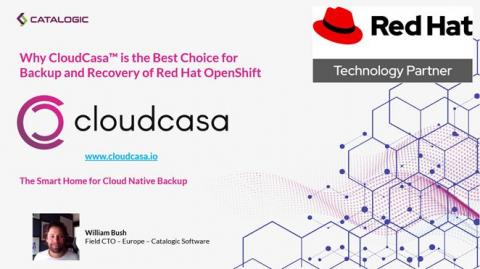
Red Hat® OpenShift® Container Platform (OCP) is an enterprise-grade Kubernetes platform for building, deploying, running, and managing containerized applications in a hybrid world. The reality is that with Red Hat OCP, building, deploying, running, and managing containerized workloads couldn’t be any easier.
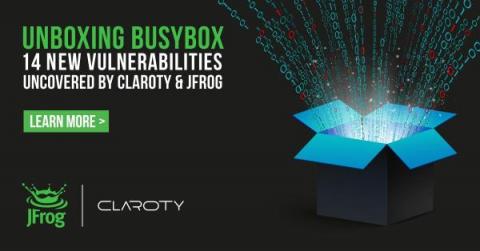
Embedded devices with limited memory and storage resources are likely to leverage a tool such as BusyBox, which is marketed as the Swiss Army Knife of embedded Linux. BusyBox is a software suite of many useful Unix utilities, known as applets, that are packaged as a single executable file. Within BusyBox you can find a full-fledged shell, a DHCP client/server, and small utilities such as cp, ls, grep, and others.
When David McCheyne, DevOps Engineer at Datto, outlined a plan to ease the company into developer-first security using Snyk, he thought it would take his teams a year to prove the concept. A seasoned DevOps pro, David understood very well the enormity of this change and was prepared to slowly introduce Datto security champions to the Snyk platform and not force the process.
On November 1st, 2021, a public disclosure of a paper titled Trojan Source: Invisible Vulnerabilities described how malicious actors may employ unicode-based bidirectional control characters to slip malicious source code into an otherwise benign codebase. This attack relies on reviewers confusing the obfuscated malicious source code with comments.