Security | Threat Detection | Cyberattacks | DevSecOps | Compliance

Utilizing Upbound Crossplane and Styra DAS to Set Policy Across a Modern Technology Stack

Upbound Crossplane with Styra Declarative Authorization Service (DAS) allows developers to elegantly provision infrastructure while preventing unsecure configuration. Crossplane applied to Kubernetes with Open Policy Agent (OPA) and Styra DAS can efficiently and effectively apply policy for centralized code and enforcement.

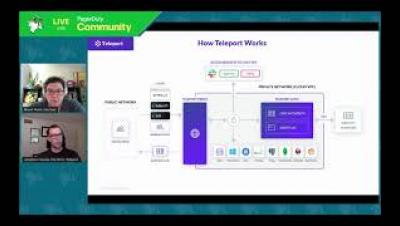
Applying Least Privilege in Kubernetes II Jonathan Canada

Scalability and Cloud-Native have driven the demand for Kubernetes, but the developer now has the harder task of building applications in a secure manner. This talk will focus on best practices for implementing least privilege and enforcing zero trust principles within Kubernetes clusters. A how-to for implementing robust Role Based Access Control (RBAC) tied into the corporate SSO/Identity provider using Teleport.

The Vulnerability Conundrum: Improving the Disclosure Process

The vulnerability disclosure process involves reporting security flaws in software or hardware, and can be complex. Cooperation between the organization responsible for the software or hardware, and the security researcher who discovers the vulnerability can be complicated. In this blog we’ll look at the vulnerability disclosure process, the parties involved and how they can collaborate productively.

Join Snyk in celebrating 31 days of Cybersecurity Awareness Month 2021

Today’s the first day of October as well as the first day of the 18th annual Cybersecurity Awareness Month. The purpose of Cybersecurity Awareness Month is not only to raise awareness about the importance of cybersecurity, but also to inspire people to improve their cybersecurity posture: whether that be through implementing multi-factor authentication, not clicking that suspicious email attachment, or even writing code more securely by utilizing a tool like Snyk. =)

Low Latency Identity-aware Access Proxy in Multiple Regions

A multi-protocol access proxy is a powerful concept for securing access to infrastructure. But accessing numerous computing resources distributed across the globe via a single endpoint presents a latency challenge. Today we are announcing that the hosted edition of Teleport Access Plane is now available in 5 regions all over the world.

What is a Proxy Server? How it Works and Critical Risks in 2021

A proxy server is an intermediary server that retrieves data from an Internet source, such as a webpage, on behalf of a user. Proxy servers have many different uses, depending on their configuration and type. Common uses include facilitating anonymous Internet browsing, bypassing geo-blocking, and regulating web requests. Like any device connected over the Internet, proxies have associated cybersecurity risks that users should consider before use.

Using Zero Trust to Mitigate Supply Chain Risks

Software supply chain attacks have been on the rise lately. With the current pervasiveness of third-party and open source libraries, which presumably developers cannot control as strongly as the code they create, vulnerabilities in these software dependencies are causing serious security risks to applications. Supply chain attacks abuse the inherent trust that users have with a software provider.

How organizations handled incidents before and after deploying AIOps - Part 2

In this highly dynamic environment, organizations are looking for ways to innovate and manage resources efficiently. In the first part of the two-part blog series, we saw how organizations handled incidents without an AIOps solution and how long it took to resolve that incident — a scenario representing different steps to resolve an incident. In the second part of the two-part blog series, we look at how organizations were able to handle incidents after deploying AIOps.

The Importance of Prioritizing Product Security

Achieving comprehensive security for the products delivered and deployed by organizations is becoming more difficult, due to a variety of factors. A key one is the growing volume, variety and complexity of software and connected devices in use. Another is the overwhelming risk of inherited software supply chain exposures. The result: Companies struggle every day to provide software with optimal security and protection against malicious activities, takeovers, data theft, and commercial sabotage.