Security | Threat Detection | Cyberattacks | DevSecOps | Compliance

What's New in Software Supply Chain Security

With new software supply chain attacks reaching the spotlight at an accelerating pace, security research uncovering novel attack methods, and new mandates and guidelines starting to come into effect -- it can be hard to stay on top of the latest developments and their implications. Catch this session as we break down the recent news related to software supply chain security and what you can do to meet new requirements and protect your software from such attacks.

Styra DAS: Building for the Open Policy Agent community

It’s been a great year so far for the Open Policy Agent (OPA) project and community. OPA achieved graduated status in the Cloud Native Computing Foundation (CNCF) in February and is quickly nearing 100 million downloads! With all this growth, we were excited to see the results of the second annual Open Policy Agent user survey. As I mentioned in my post on the Open Policy Agent blog, we survey the community to help better steer the project's long-term roadmap in the right direction.

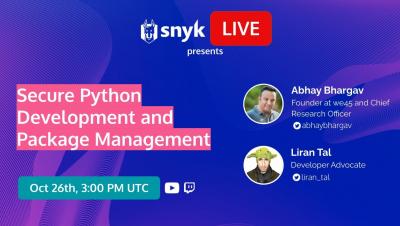
A (soft) introduction to Python dependency management

Python has been deemed as a “simple” language — easy to use and easy to develop scripts to do numerous tasks — from web scraping to automation to building large-scale web applications and even performing data science. However, dependencies are managed quite differently in Python than in other languages, and the myriad options of setting up an environment and package managers only add to the confusion.

Detect and prevent dependency confusion attacks on npm to maintain supply chain security

On February 9, 2021, Alex Birsan disclosed his aptly named security research, dependency confusion. In his disclosure, he describes how a novel supply chain attack that exploits misconfiguration by developers, as well as design flaws of numerous package managers in the open source language-based software ecosystems, allowed him to gain access and exfiltrate data from companies such as Yelp, Tesla, Apple, Microsoft, and others.

DevSecOps Road Trip UK stop - Andrew Martin & Lili Kastilio

Session 1: Threat Modelling Kubernetes Cloud native container and Kubernetes systems bring new threats and risks to our precious workloads. As cloud technologies undergo rapid innovation and new tools and techniques emerge, security can get left behind. The answer to this conveyor-belt of potential insecurity? Threat modelling!

Security Incident Containment with Teleport Session and Identity Locking

What would you do when a security incident is detected? Shut down the servers? Pull out the power cord from the data center? When an incident is detected, both the incident method and the time required to contain an incident are essential to limit the damage. The slower you are to react, the more damage an incident would incur. And a service downtime to contain an incident can cost businesses even more than a security incident itself.

Featured Post

Dev-first SAST: Increase your developer productivity while staying secure

Static application security testing (or SAST) used to be a term coined by the security team, to help developers test their code early in the software development life cycle (SDLC). Unlike dynamic testing, it does not require a working application, which allows developers to identify security vulnerabilities while they code, so they can spot them as soon as they appear and fix them when it's easiest and fastest to do so. This cuts down their future workload by decreasing the backlog of issues they'll have to address later.