Security | Threat Detection | Cyberattacks | DevSecOps | Compliance

Using Asset Management to Keep a Cloud Environment Secure

In modern network environments focused on cloud technology, organizations have undergone a significant transformation in the development and deployment of their IT assets. The introduction of cloud technology has simplified and expedited the deployment process, but it often lacks centralized change management. The cloud's shared responsibility model enables quick deployment and scaling but can pose security risks if not properly managed and understood.

Amazon Sends Email to Customers on Common Scam Tactics

We've reported on several Amazon scams, but for once, there is positive news. Amazon sent an email Thursday morning highlighting the top scams your users should watch out for: Prime Membership Scams Per Amazon, "These are unexpected calls/texts/emails that refer to a costly membership fee or an issue with your membership and ask you to confirm or cancel the charge.

Automating least privilege access in the cloud

In today's digital landscape, where data breaches and security threats are a constant concern, ensuring least privilege access is of utmost importance for companies operating in the cloud. Granting the principle of least privilege to employees helps minimize the risk of unauthorized access, accidental misuse, and insider threats. However, achieving and maintaining least privilege access can be challenging, often resulting in manual processes, delays, and potential security gaps.

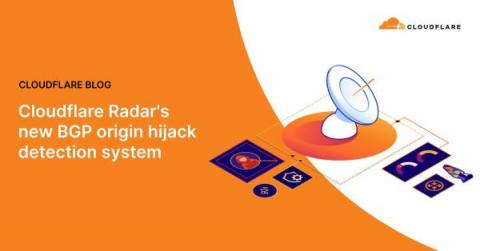
Cloudflare Radar's new BGP origin hijack detection system

Border Gateway Protocol (BGP) is the de facto inter-domain routing protocol used on the Internet. It enables networks and organizations to exchange reachability information for blocks of IP addresses (IP prefixes) among each other, thus allowing routers across the Internet to forward traffic to its destination. BGP was designed with the assumption that networks do not intentionally propagate falsified information, but unfortunately that’s not a valid assumption on today’s Internet.

The Five Pillars of Cloud Security

As more employees move to remote work, more of today’s business environment is shifting towards the cloud. Indeed, approximately 90% of companies use at least one cloud-based service. While it brings great benefits, the cloud also brings challenges, including properly securing cloud-based assets. Cybercriminals are well-versed in corporate cloud usage and are successfully exploiting that knowledge. In the past year and a half, nearly 80% of companies suffered a cloud-based data breach.

Introducing Keeper Security Government Cloud for MSPs

Managed Service Providers (MSPs) play a crucial role in delivering reliable and secure IT services to organizations of all sizes and across various industries. With the rise in cyber threats, especially ransomware attacks targeting public sector organizations, the need for robust cybersecurity tools has become paramount.

AWS threat emulation and detection validation with Stratus Red Team and Datadog Cloud SIEM

As attackers get more creative in their malicious tradecraft, cloud security teams must be able to keep up with detections that provide adequate coverage against the diverse threats to their cloud environments. Threat emulation enables cloud security teams to leverage their understanding of threat actor behaviors as a feedback loop for developing cloud-based detections and validating their resilience.