Security | Threat Detection | Cyberattacks | DevSecOps | Compliance

How Hackers Used Distraction To Rob Gaming Giant Ubisoft

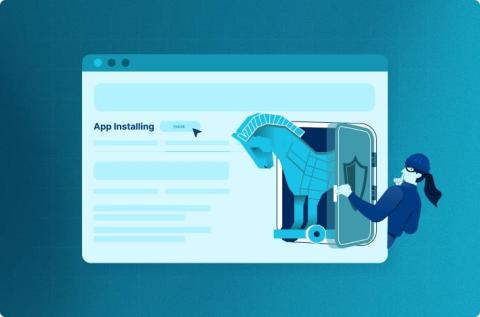
Attackers broke into major gaming platform Ubisoft and started spraying free in-game currency, triggering confusion as teams tried to understand the sudden rush of skins and purchases. While everyone focused on the noisy mess, the intruders quietly stole source code for the full game catalogue, walking away with the real prize.


How Agentic Tool Chain Attacks Threaten AI Agent Security

AI agents are rapidly transforming enterprise operations. Unlike traditional software that follows fixed code paths, AI agents interpret prompts, form plans, select tools, and react to results in a continuous loop. At the heart of this capability is the agent's ability to actively select and execute capabilities based on natural language descriptions, schemas, and examples.

Par for the Course: Why Golf Facilities Are Prime Targets for Cyberattacks

Golf can be an incredibly frustrating game to play. The great Winston Churchill described golf as "a game whose aim is to hit a very small ball into an even smaller hole, with weapons singularly ill-designed for the purpose.” Interestingly, cybersecurity professionals face the exact opposite problem.

Types of Web App Attacks Explained by Experts

Web applications process billions of transactions every day, handling everything from user credentials to financial records. This constant exchange of data makes them prime targets for attackers who are looking to gain access for data theft or service disruption. Web application security vulnerabilities are highly sophisticated attack vectors that can exploit authentication flows, business logic, and API integrations.

The Top 5 Vulnerabilities Attackers Are Using Against Your Vendors (And What It Says About Third-Party Risk)

When threat actors target your vendors, they’re not just looking to exploit a system for a single attack. They’re looking for every opportunity to scale up their operations. This means seeking ways to push their compromises as far downstream into the supply chain as they can go.

The Rise of DLL Side-Loading Cyber Attacks and Browser Data Theft

Content originally created and published by Venak Security. Cybercriminals are increasingly adopting stealthy and advanced techniques, notably Dynamic-Link Library (DLL) side-loading and browser memory scraping, to install malware that stealthily harvests users’ passwords, credit card data, cookies, session tokens and more. These attacks blend social engineering, search manipulation and memory-level exploitation to bypass traditional defenses and compromise victims at scale.

Anatomy of a Vishing Attack: Technical Indicators IT Managers Need to Track

If your organization hasn’t encountered a vishing attack yet, it’s probably only a matter of time. Vishing, or voice phishing, is a sophisticated type of social engineering that adds a whole new dimension to common scams. Rather than emails or text messages, threat actors employ phone calls or online voice calls to carry out vishing schemes. Particularly savvy attackers can even copy a real person’s voice to deceive, coerce, or manipulate potential victims.

8 Ways Organizations Reduce Exposure to Social Engineering Attacks

It is not always malware or a sophisticated tool that results in cyber threats. Sometimes, this happens through a convincing email or a request that appears trustworthy. There have been occasions where attackers created a moment of urgency to lead someone into clicking, sharing, or approving without realizing the consequences. This is social engineering. Social engineering threats are becoming more dangerous.

The Continuing Risk of Remote Code Execution

In 2025, there were more than 48,000 vulnerabilities published, amounting to over a 20% increase from 2024. More troubling than the sheer volume of vulnerabilities in 2025 is that more than a third of them were given a rating of “high” or “critical” severity. For security teams already stretched too thin, a proactive vulnerability management plan that patches or otherwise remediates all vulnerabilities is too far out of reach.

What Hackers Know About Fileless Malware (And You Should Too)

Fileless malware doesn't rely on flashy exploits or obvious downloads, which is exactly why it works so well. Instead, it slips into systems quietly, using tools that already belong there. That makes it harder to notice and easier to underestimate. If you think security threats always arrive as suspicious files, you're already behind. Understanding how fileless attacks operate helps you spot warning signs earlier and adjust defenses before real damage starts.

2026 Study from Panorays: 85% of CISOs Can't See Third-Party Threats Amid Increasing Supply Chain Attacks

Panorays, a leading provider of third-party security risk management software, has released the 2026 edition of its annual CISO Survey for Third-Party Cyber Risk Management. The survey highlights third-party cyber risk as one of the most critical challenges facing security leaders today, driven largely by a lack of visibility. While 60% of CISOs report an increase in third-party security incidents, only 15% say they have full visibility into those risks.

Critical servers under attack: Why backup isn't enough in 2026

Do you know what it takes to launch a retail website that neatly organizes products and enables customers to add items to their carts with a single click? Do you know what powers the booking system your clients rely on? What is the hidden engine that manages your clients’ logistics, controls their supply chain, processes invoices and stores data for analytics and compliance? These are the systems MSPs are trusted to keep running every day. Critical servers.

Why Physical Infrastructure Still Matters in a Cyber World

As organizations accelerate cloud adoption and digital transformation, it's tempting to think physical infrastructure is becoming less important. Software-defined networks, virtual machines, and remote access tools dominate security conversations. Yet the reality is more nuanced. Digital systems still rely on physical foundations, and when those foundations fail, even the most sophisticated cyber defenses can unravel.

Automate Security: A Practical Guide for Modern Organizations

Many attacks start without drawing attention. Nothing looks obviously wrong at first. It could be through a reused password or an exposed service that allows attackers to gain access to their systems. Sometimes, a well-crafted email is all that's needed. By the time security teams notice something is wrong, attackers have already been inside for days or weeks. This poses a huge challenge for many security teams. They often use multiple tools and conduct manual checks to find signs of intrusion.

Cyber War is Already Here. CISOs Must Prepare for Cyber Conflict

Cyber warfare isn’t coming—it’s already here. This conversation on The Cyber Resilience Brief dives into the Fifth Domain of Warfare—and why nation-state cyber activity should matter to every organization. From Russia’s chaos-driven campaigns to China’s long-game persistence, Iran’s retaliatory attacks, and North Korea’s financial theft—your network isn’t a bystander.

How to Protect Telematics Systems from Cyberattacks?

Telematics systems face elevated cybersecurity risks due to continuous connectivity between vehicles, cloud servers, and users. This constant data exchange expands the attack surface across fleet operations, making these systems attractive targets for cyber threats. Cyberattacks on telematics infrastructure can expose sensitive data such as vehicle locations, driver behavior, operational workflows, and personal information. When compromised, this data can disrupt fleet operations, damage trust, and create serious compliance and regulatory risks.

Initial Attack Vectors: How Most Cyber Attacks Begin

Malicious actors use different tactics to launch cyberattacks, commonly referred to as attack vectors. They exploit misconfigurations, weak controls, and other poor security practices to gain unauthorized access to victims’ systems. There is a document co-authored by cybersecurity authorities from various countries, like the US, Canada, the UK, the Netherlands, and New Zealand. It is released by CISA (Cybersecurity and Infrastructure Security Agency).

Domains, DNS and Forgotten Risks in Modern Security Stacks

When most cybersecurity teams map their threat landscape, they start with endpoints, users, cloud environments and network layers. It's a solid strategy - but it leaves one critical layer wide open: the domain and hosting infrastructure everything else depends on.

AI-Enabled Cyber Intrusions: What Two Recent Incidents Reveal for Corporate Counsel

This article was authored by Daniel Ilan, Rahul Mukhi, Prudence Buckland, and Melissa Faragasso from Cleary Gottlieb, and Brian Lichter and Elijah Seymour from Stroz Friedberg, a LevelBlue company. Recent disclosures by Anthropic and OpenAI highlight a pivotal shift in the cyber threat landscape: AI is no longer merely a tool that aids attackers, in some cases, it has become the attacker itself.

Behavioral Threat Detection: Identifying Attacks That Blend into Normal Activity

Some attacks are easy to spot. Others aren’t. In many cases, nothing obviously breaks or crashes, and no malware ever shows up. Nothing looks wrong at first. Access appears normal, and systems continue to run as usual. Modern attacks are challenging to detect because attackers often use the same tools and access paths as legitimate users. In addition, attackers remain low-key and use access that appears normal.

Agentic AI Security: How Microsoft Prevents Autonomous Agent Attacks?

As agentic AI systems move into the mainstream—powered by tool calling, MCP, and autonomous workflows—security is no longer a “nice to have.” It’s mission-critical. In this episode, we sit down with Raji, Principal Engineer & Manager for AI and Safety at Microsoft, to deep-dive into the rapidly evolving world of AI security, autonomous agents, and enterprise governance. Discover how Microsoft identifies and mitigates risks in agentic AI, distinguishes AI Security vs AI Safety, and enables organizations to deploy autonomous systems safely at scale—without slowing innovation.

Beaconing Detection: How Attackers Stay Hidden

Attackers, after an initial compromise, look to remain inside a network for as long as possible. For this, they use different methods. Beaconing is one of the common techniques used to maintain this access. Beaconing activity can easily blend into normal traffic and can remain unnoticed for long periods. Therefore, it is important for IT and security teams to understand how beaconing works in order to effectively carry out beaconing detection and response.

Account Takeover Prevention for Credit Unions: What Actually Works in 2026

Account takeover prevention for credit unions has reached an inflection point. One concept underpins most modern failures: the timing gap, the period between a member engaging with a scam or impersonation interaction and the moment a security or fraud team becomes aware of risk. During this gap, access is often treated as legitimate even though compromise has already occurred.