Security | Threat Detection | Cyberattacks | DevSecOps | Compliance

Guarding the Manufacturer's Core: Securing Intellectual Property in the Age of AI at Renesas

Organizations like Renesas face critical risks when utilizing AI, as these platforms often incorporate user-submitted data into their models. Significant security incidents have occurred where sensitive source code, firmware, and proprietary designs were inadvertently made public after being uploaded for testing. A major business risk involves the potential loss of intellectual property, which can directly impact an organization's primary revenue streams. Beyond data leakage, AI presents risks through "poisoning" and the fact that AI-generated output is frequently inaccurate.
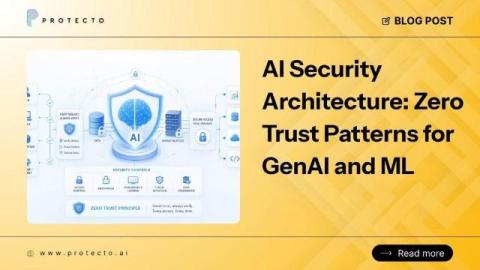
AI Security Architecture: Zero Trust Patterns for GenAI and ML

There is no doubt that AI, or Artificial Intelligence, is rapidly changing how businesses are operating. However, it also brings new risks when it comes to data. As per industry reports, 72% of companies mention that there has been a significant increase in organizational cyber risks. It is therefore necessary to have a strong AI security architecture that helps to protect sensitive information. In light of this, 85% of organizations are now increasing their cybersecurity budget.

Codex builds at AI Speed, 1Password Secures it

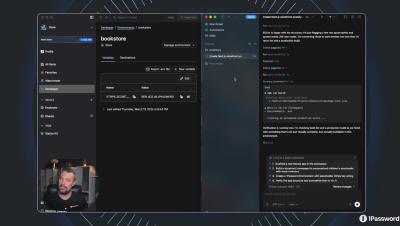
Secure secrets for agentic workflows with 1Password MCP Server and Codex As AI agents write, execute, and ship production code, they need access to systems like databases, APIs, and deployment pipelines. With 1Password Environments MCP Server for Codex, instead of putting credentials directly into prompts or files, we provision a secure runtime environment where secrets are mounted, used, and discarded, with user authentication required at the moment of access.

Balancing AI Innovation and Risk: Enhance Organizational Resilience

‍ Artificial intelligence (AI) offers businesses vast opportunities to boost efficiency, improve decision-making, and innovate faster. Yet, these benefits come with significant risks that can impact business operations and resilience if not managed carefully. This article explores how organizations can balance leveraging AI’s advantages while controlling its inherent risks. ‍

Govern AI agents the right way with Identity Manager by One Identity

AI agents are becoming an inseparable part of identity governance, sometimes being created by other AI agents and acting proactively across platforms at machine speed — but who’s watching them? Identity Manager 10.0 by One Identity answers that question. Hear Ingrid Thorpe, director of product management for Identity Manager, explore how the solution governs agentic workflows, tackles agent-specific risks and integrates across cloud and enterprise platforms, holding non-human identities (NHIs) accountable.

Essay Grader AI: The Complete Guide to Saving 80% of Your Grading Time

Teachers spend countless hours every week reviewing student essays, providing feedback, and assigning grades. For many educators, grading has become one of the most time-consuming and mentally exhausting parts of the job. What if you could dramatically reduce that burden while actually improving the quality of feedback your students receive?

AI-Driven Cyber Warfare Reshapes Global Defense Readiness

This article was originally published in TechRadar Pro. The Iran conflict is serving as an AI testbed for the next era of cyber conflict. Most organizations are watching the tactics and impact unfold with cybersecurity defenses that are simply not prepared for this level of sophistication. Meanwhile, technology leaders are seeing AI as both their biggest opportunity and a major new attack vector.

Why Legacy DLP Fails Against Agentic AI

Security teams that deployed legacy DLP years ago built something real. The rules fire. The alerts go out. Compliance boxes get checked. The problem is not that those programs stopped working. It is that the threat moved, and the architecture did not. Agentic AI has introduced a class of data movement that legacy DLP was never designed to govern: autonomous, continuous, multi-step, and operating at machine speed across systems that static rules cannot enumerate in advance.

Agents need boundaries with Fotis Chantzis from OpenAI, Zero-Shot Learning

Agents need boundaries | Fotis Chantzis from OpenAI Agents don't fit old identity models. As OpenAI’s Agent Security Lead, Fotis Chantzis has a front-row seat to see how agents push identity systems beyond what they were built to control. That’s where things start to fall apart and where most teams lose control.