Security | Threat Detection | Cyberattacks | DevSecOps | Compliance

How AI Just Killed Expensive Enterprise Software

AI is disrupting the enterprise software market. James Rees built a fully-functional GRC tool in just two weeks using Codex. No development team needed. No million-pound licensing fee, just AI and subject matter expertise. If a CISO can build what competitors charge hundreds of thousands for in a couple of weeks, what happens to the vendor market? As large language models like Daybreak and Mythos evolve, this problem gets worse for SaaS companies.

How Modern DLP Enables AI Adoption Without Slowing Down the Business

Organizations are not choosing between AI adoption and data security. Rather, they are discovering, often after the fact, that these two priorities are pulling in opposite directions. The engineering team has been using GitHub Copilot for six months. Finance is running variance analysis through ChatGPT. Legal is pasting contract language into Gemini for redlining. According to Cyberhaven Labs research, 39.7% of the data employees share with AI tools is sensitive.

Agentic SOCs: The public sector's new AI cybersecurity defense

Adversaries are using AI to launch cyber attacks in record time, forcing security teams to measure responses in seconds instead of hours or days. Detecting these attacks is increasingly difficult. Phishing campaigns built by large language models (LLMs) achieve click-through rates 4.5x higher than traditional methods.1 Public sector organizations are at an inflection point with cybersecurity. Most security stacks in place today weren’t built for this level of speed.

Your AI bill is out of control. Cloudflare can fix it now.

There isn't a CIO on the planet not worried about AI spend right now. CFOs are increasingly nervous, too. For fear of falling behind, many companies have pushed their employees to use AI as aggressively as possible. The edict was clear: "Move fast, we'll figure out the bill later." And for the most part, it worked: AI has been genuinely transformational for the teams that leaned in. But the costs are real: we’ve heard countless horror stories of huge bills and painful overages on token spend.

How to Secure AI Adoption In Your Organization

The era of "typing into a box" is over. For years, we viewed artificial intelligence as a digital assistant—a sophisticated autocomplete tool that waited for human input. But according to Martin Kraemer, KnowBe4’s CISO Advisor for Europe and the Middle East, that dynamic has shifted. We have moved from asking AI questions to giving AI jobs. In a recent webinar, Martin explores the transition from AI tools to AI agents.

NVIDIA NIM Models Are Now Governed Assets in Your Supply Chain

NVIDIA NIM (NVIDIA Inference Microservices) packages production-ready AI models into optimized containers for enterprise deployment. Your developers need them. Your coding agents pull them. And until now, they pulled them directly from NVIDIA’s NGC registry, bypassing the supply chain controls you’ve spent years building. JFrog AI Catalog now brings NVIDIA NIM models under the same governance as every other artifact in your organization, with no separate registry and no governance gap.

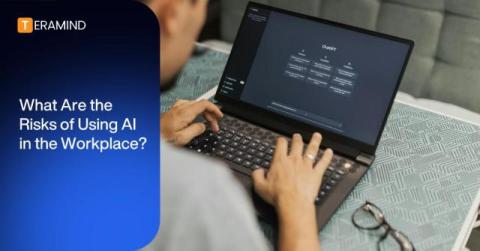
What Are the Risks of Using AI in the Workplace?

Bringing artificial intelligence into the office is a bit like adopting a hyper-energetic, brilliant, but chaotic intern. It can supercharge productivity, but if left unsupervised, it can accidentally delete the company database or invite a lawsuit. While the benefits of workplace AI are heavily advertised, deploying it without a safety net introduces significant vulnerabilities. Here’s a comprehensive breakdown of the risks businesses face when integrating AI into their daily operations.

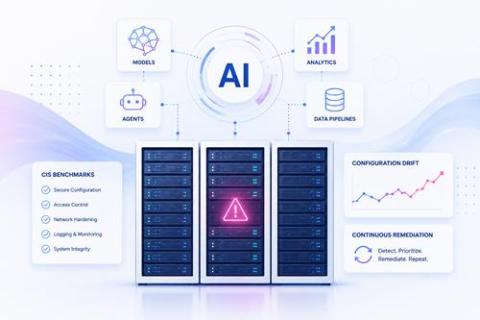
You Can't Be AI-Secure on a Misconfigured Infrastructure

Walking the floor at Infosecurity Europe this week, it was impossible to avoid the subject of AI. Every conversation seemed to touch on it in some way. Vendors were demonstrating AI-powered detection capabilities, security teams were discussing governance frameworks, and practitioners were debating how best to secure the models, agents and data pipelines that are rapidly becoming part of everyday enterprise operations.