Security | Threat Detection | Cyberattacks | DevSecOps | Compliance

Claude Mythos Just Killed Exploitability as a Security Signal

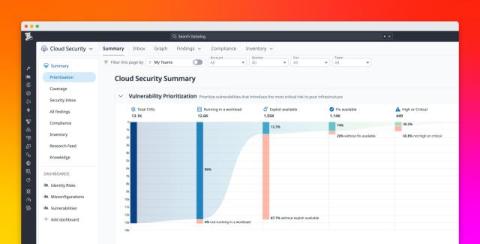
The game has changed. For years, security teams used exploitability to decide what to patch first. If a vulnerability had a known exploit, it went to the top of the list. If not, it waited. But with the arrival of next-gen AI models like Claude Mythos, that strategy is officially broken. In this video, we discuss how Claude Mythos has collapsed the barrier to building working exploits. What used to take real skill and significant time can now be weaponized in minutes. When everything is exploitable, exploitability becomes noise.

Types of AI Guardrails and When to Use Them (2026)

The types of AI guardrails are input guardrails, output guardrails, security guardrails, ethical guardrails, and operational guardrails, each positioned at a different failure point across an inference pipeline. Gartner’s research found that 30% of generative AI projects don’t survive past the proof-of-concept stage, with weak risk controls cited as the leading reason. Most of those projects weren’t badly built. The models worked. The gaps were in what sat around them.

Why API Discovery Is the First Step to Securing AI

AI risk doesn’t live in the model. It lives in the APIs behind it. Every AI interaction triggers a chain of API calls across your environment. Many of those APIs aren’t documented or tracked. That’s your real exposure. Shadow API discovery gives you visibility into those hidden endpoints, so you can find them before attackers do. If you don’t know which APIs your AI relies on, you can’t secure the system.

Stopping AI Agent Attacks: How Falcon AIDR Blocks Prompt Injection

See how attackers can exploit AI agents like OpenClaw using hidden prompt injection techniques—and how CrowdStrike Falcon AIDR stops them in real time. In this demo, we show how a seemingly harmless resume contains invisible malicious instructions that trick an AI agent into leaking sensitive data, including API tokens and system access. Then, we replay the same scenario with Falcon AIDR enabled, where the attack is detected and blocked before any damage is done.

Claude Mythos Explained: AI Finding Zero-Day Vulnerabilities and Chaining Exploits

Claude Mythos is an AI model capable of finding and chaining zero-day vulnerabilities at scale. That changes how attacks happen, especially in environments where you can’t patch fast enough. The Forescout 4D Platform with VistaroAI helps organizations respond with real-time visibility and dynamic control across all connected devices.

Cybersecurity AI Explained: Agentic AI, PQC, and Real-World Security Challenges

At the 2025 RSA Conference, Justin Foster joins Zeus Kerravala to break down where AI in cybersecurity is actually delivering value and where it’s falling short. As security teams deal with growing complexity, many are finding that today’s AI tools create as much friction as they solve. This conversation explores how a shift toward agentic, skills-based AI can help teams move faster, reduce noise, and focus on what really matters.

Navigating the Post-Mythos Landscape with Bitsight

The rise of AI-driven vulnerability discovery using Anthropic's Claude Mythos, as well as similar tools from Google and OpenAI, is completely changing the calculus of cyber risk. The number of vulnerabilities is exploding. The time it takes for exploits to appear is shrinking. The patching cadences and scan intervals, assessments and risk registers that many organizations still rely on are rapidly becoming ineffective.

What Is AI Context Security?

Every enterprise wants to use AI on its most valuable data — customer records, financial documents, clinical notes, legal files, engineering IP. The problem is simple: the moment that data enters an AI workflow, traditional security stops working. Firewalls protect the network. Encryption protects data at rest. Access controls protect the database. But none of them protect what happens when an AI agent retrieves five documents, synthesizes an answer, and delivers it to a user.