Mailchimp
Not subscribed to OpsMatters Newsletter


When it comes to your SIEM, your data is only as useful as your ability to ingest and analyze it. To solve complex security problems, your team ideally needs the ability to comprehensively monitor events within your environment with contextual insights from high-volume data sources.
Most security pros know the value of log data. Organizations collect metrics, logs, and events from some parts of the environment. But there is a big difference between monitoring and a true centralized log management. How can you measure the effectiveness of your current logging solution? Here are four signs that it’s time to centralize log management in your organization: This post is based on content from the new Devo eBook The Shift Is On.
In this quick guide for cybersecurity professionals, we’ve invited some of our favourite security experts who have previously worked with Metasploit to explain why this tool is so valuable for conducting effective penetration tests and network reconnaissance tasks. Our first expert Michael Roninson, Security Expert at Cerber Tech gives a brief overview of this tool and how to use it in his response below;
In the late 1990’s and early 2000’s there was a concept that was bandied about that was coined “Return on Security Investment” or ROSI. Borrowing from the common business term Return on Investment (ROI) where a return on a particular investment (capital investment, personnel, training etc.) could be quantified, the cybersecurity industry attempted to quantify a return on security investment.
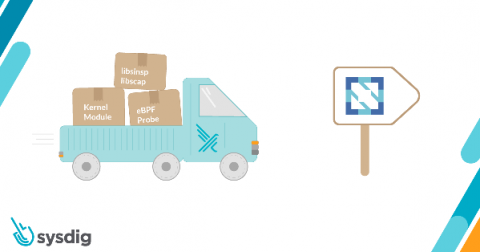
Today, I’m excited to announce the contribution of the sysdig kernel module, eBPF probe, and libraries to the Cloud Native Computing Foundation. The source code of these components will move into the Falco organization and be hosted in the falcosecurity github repository. These components are at the base of Falco, the CNCF tool for runtime security and de facto standard for threat detection in the cloud.